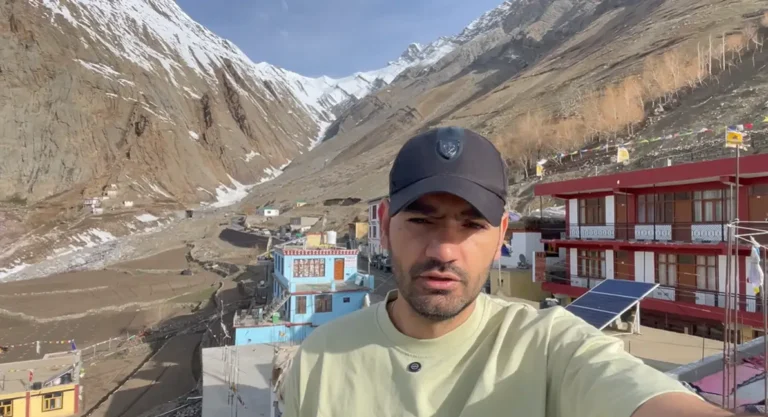
Nako Village Travel Guide: Is Nako Lake Overhyped?
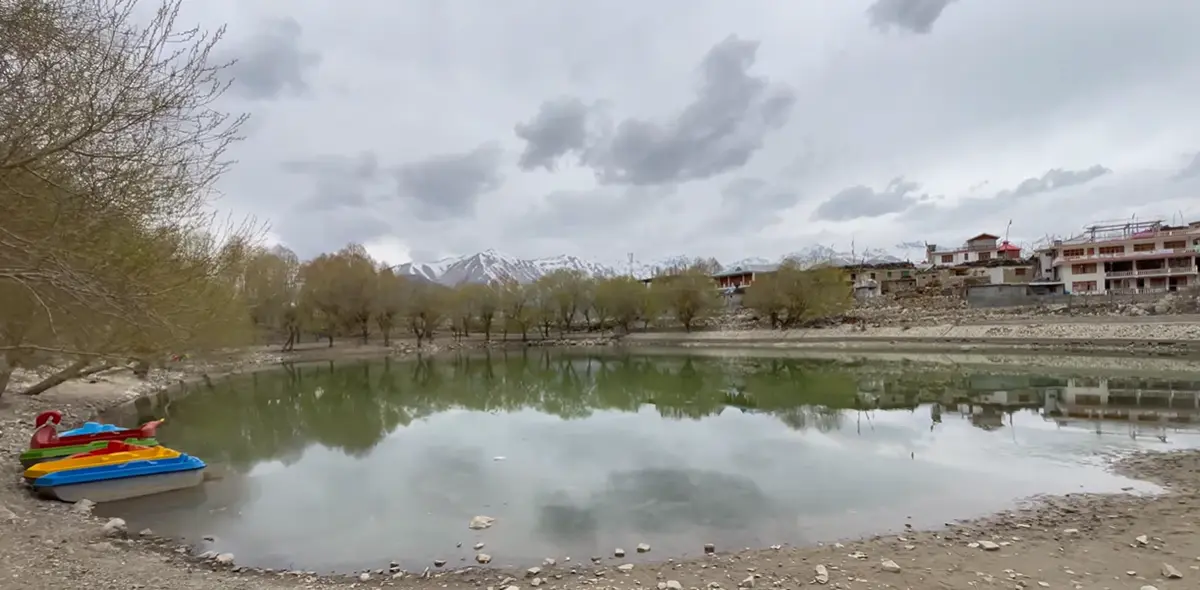
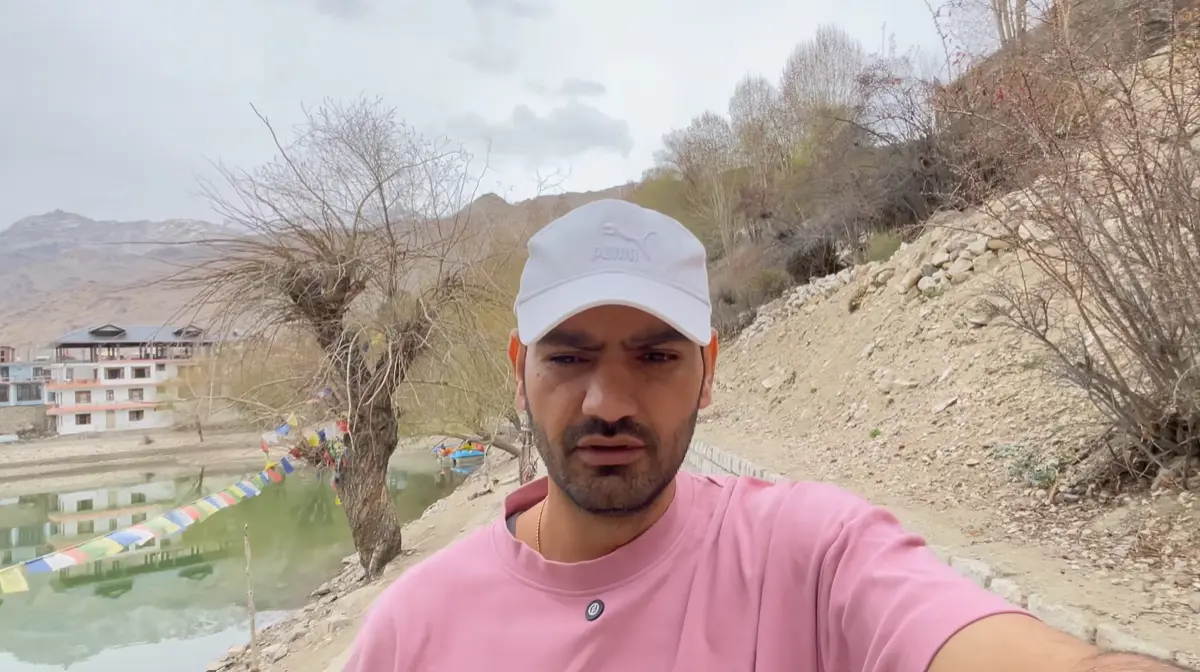
We reached Nako around noon after leaving Kalpa early, and my first reaction at the lake was more restrained than the photographs I had seen online. It was quiet, the mountain backdrop was beautiful and there was almost no crowd, but the lake itself looked fairly ordinary during our visit. A part of the edge appeared dry, the small food setup near the water was closed, and the boats were simply parked beside the shore.
This Nako Village travel guide is based on that stop, not on a winter postcard or a tourism brochure. I will show you what the lake looked like, how we reached it, what was open, how much time I would keep for Nako, where we ate, and whether I think you should stay overnight or continue towards Spiti.
Nako Village at a glance
Nako is a high-altitude village in Kinnaur district, Himachal Pradesh. The official Kinnaur district page places it at 3,663 metres and says it is around 119 km from Kalpa, about 3 km above the Hangrang Valley road. The village is known for its small lake, Buddhist temples and the mountain setting around it. Those facts explain why it appears on so many Kinnaur and Spiti road-trip plans.
The scale can surprise you. Nako Lake is compact, and the main sights do not require a full day if you are only stopping between Kalpa and the Spiti side. During our visit, one or two hours felt adequate for the lake, a walk through the village, some food and the monastery if it is open when you arrive. Travellers who want a slower evening, local lanes or sunrise light may prefer an overnight stay.
- Location: Nako, Kinnaur district, Himachal Pradesh
- Altitude: 3,663 metres, according to the Kinnaur district administration
- Main reasons to stop: Nako Lake, the village, Buddhist temples and a break on the Kalpa to Spiti route
- Time we found practical: roughly one to two hours for a short stop
- Our onward plan: continue towards Mudh Village in Pin Valley
Is Nako Lake really worth visiting?
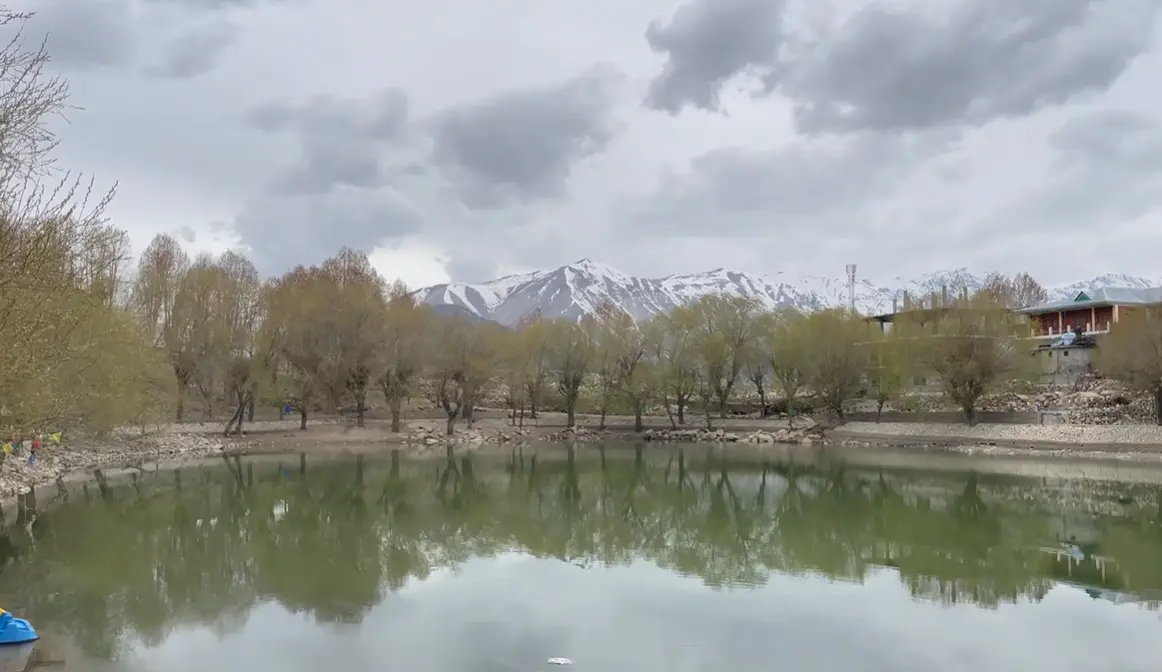
Yes, if Nako already sits on your Kinnaur to Spiti route. I would not describe the lake we saw as a destination that justified a long detour by itself. The calm setting, willow-lined edge, prayer flags and snow-marked mountains made the stop pleasant, yet the water level and closed lakeside activity made the actual experience less impressive than the dramatic label “Himalayan paradise” suggests.
That mixed answer matters because season, light and expectations can change how Nako feels. We had cloud cover, which was a relief after driving and walking in the strong high-altitude sun. There was no rush around us. We could walk slowly, look across the water and hear very little beyond the breeze. Peace was the strongest part of the visit.
The lake, though, was not in its best-looking condition. One side appeared partly dry and the colour was muted under the cloudy sky. We saw paddle boats and life jackets, so boating seems to operate at some times, but nobody was running it while we were there. I would not plan a visit around boating unless you confirm locally on the day.
Our drive up and the short walk to the lake
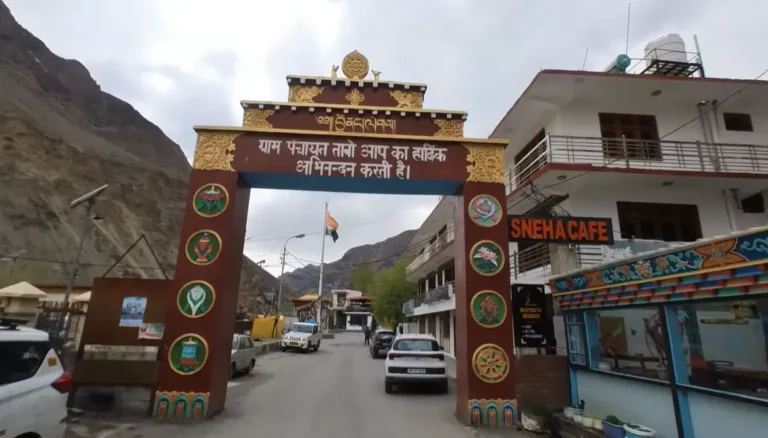
We turned towards Nako from the main road and drove roughly 1.5 km on a narrow approach inside the village, based on what I noted during the trip. We parked before the lake and covered the final section on foot. It was not a long walk, but the lanes are narrow enough that trying to take a vehicle to the last possible point can create more trouble than it saves.
The last stretch gives you a closer look at the village rather than a polished tourist entrance. Houses sit close together, construction was visible in a few places, and the lake appears almost suddenly after the lane. The approach felt compact and slightly congested to me. That is not necessarily a negative, but it is different from arriving at a wide, open valley viewpoint.
Parking where there is safe space and walking the remaining distance is the sensible choice. Keep your pace easy because Nako is above 3,600 metres. We had already spent time in the mountains and still did not rush. If the altitude feels uncomfortable, the lake is not important enough to ignore what your body is telling you.
Nako Village travel guide: what we actually found beside the lake
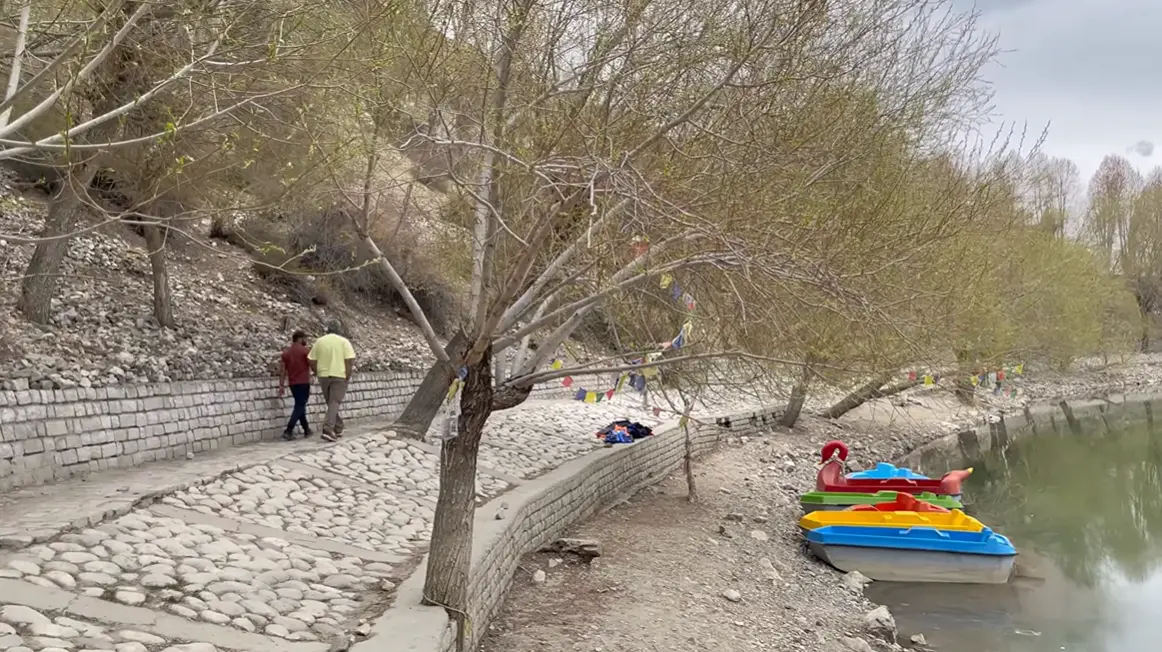
The lakeside was exceptionally quiet when we arrived. We could not see another tourist for a while. The boats were pulled up near the shore, life jackets were lying nearby and a small dhaba-like structure stood beside the water, but it was closed. That detail belongs in an honest Nako Village travel guide because seasonal silence also means fewer services.
There were no active tea, coffee or Maggi stalls right beside the lake during our stop. That detail changes the visit more than you might expect. After a drive and a short high-altitude walk, a hot cup of tea sounds simple, but we had to go back towards the village entrance and main road for it. Carry water and do not assume the lakeside stall will be open.
A stone path follows part of the shore beneath the trees. Prayer flags add colour, and the parked paddle boats make the scene more playful even when they are not moving. You can take a relaxed circuit, sit for a while and photograph the reflections if the water is still. Just keep the visit respectful. This is part of a lived-in village, not a recreation park built only for visitors.
The cloud cover worked in our favour. Direct sun at this altitude can feel sharp, while the grey sky made walking comfortable. It also flattened some of the colours in the lake. That is the trade-off visible in our photographs: comfortable conditions and soft reflections, but none of the intense blue that edited travel images can lead you to expect.
Nako is more than the lake
The official district information describes small but significant Buddhist temples in Nako and a rock believed locally to bear the imprints of Padmasambhava. Himachal Tourism also identifies the village’s revered Buddhist monastery as one of its main attractions. If you have come this far, pairing the lake with the monastery gives the stop more meaning than treating the water as the only attraction.
We planned to see the monastery after the lake, but the footage and transcript do not document a proper visit inside it. I am not going to write an imagined account of murals, prayer halls or opening times. Check access locally, dress respectfully, keep noise low and follow any photography restrictions displayed at the site.
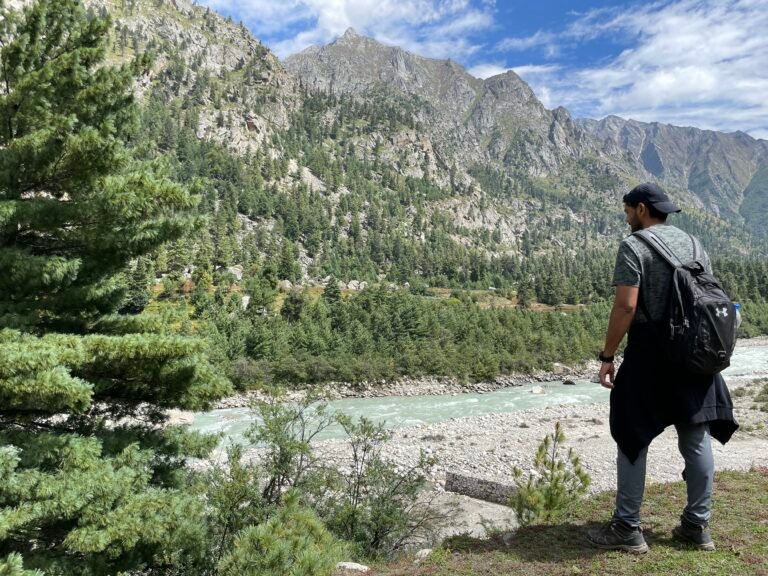
A walk through the lanes can also be worthwhile if you are not racing the clock. The village sits in a high, dry landscape that already feels different from greener Kalpa. You notice the shift towards the barrenness associated with the Spiti route. Flat-roofed homes, narrow lanes, prayer flags and the surrounding slopes give Nako its character even when the lake does not deliver a dramatic first impression.
Lunch at Khosh Dhaba near the entrance
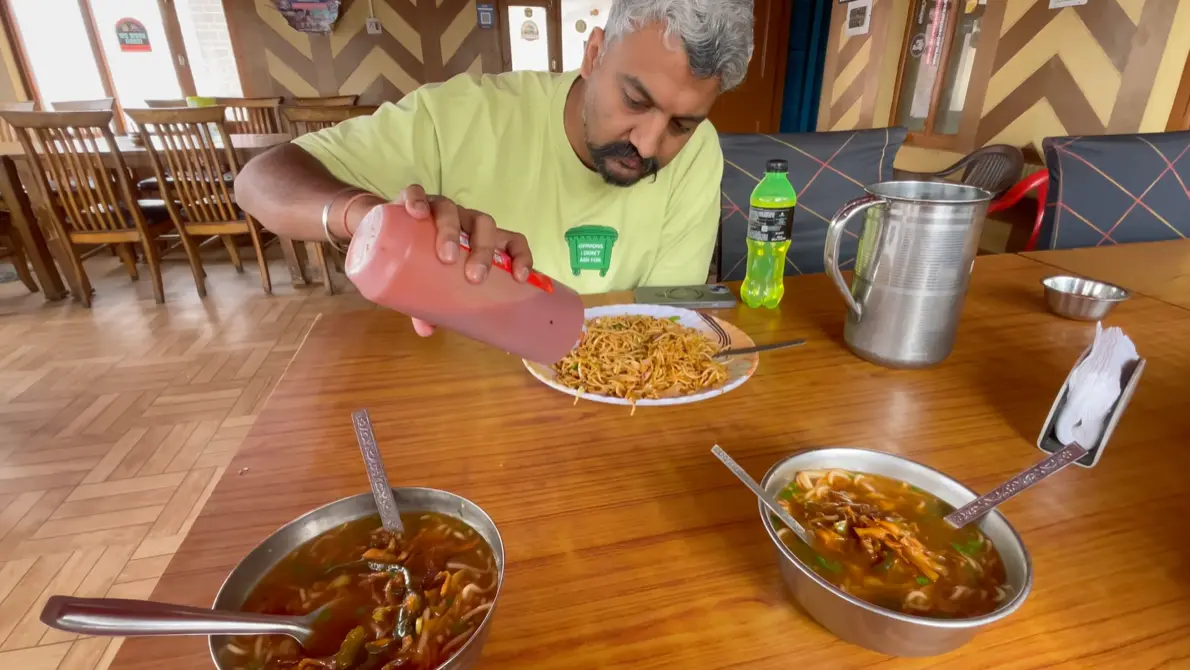
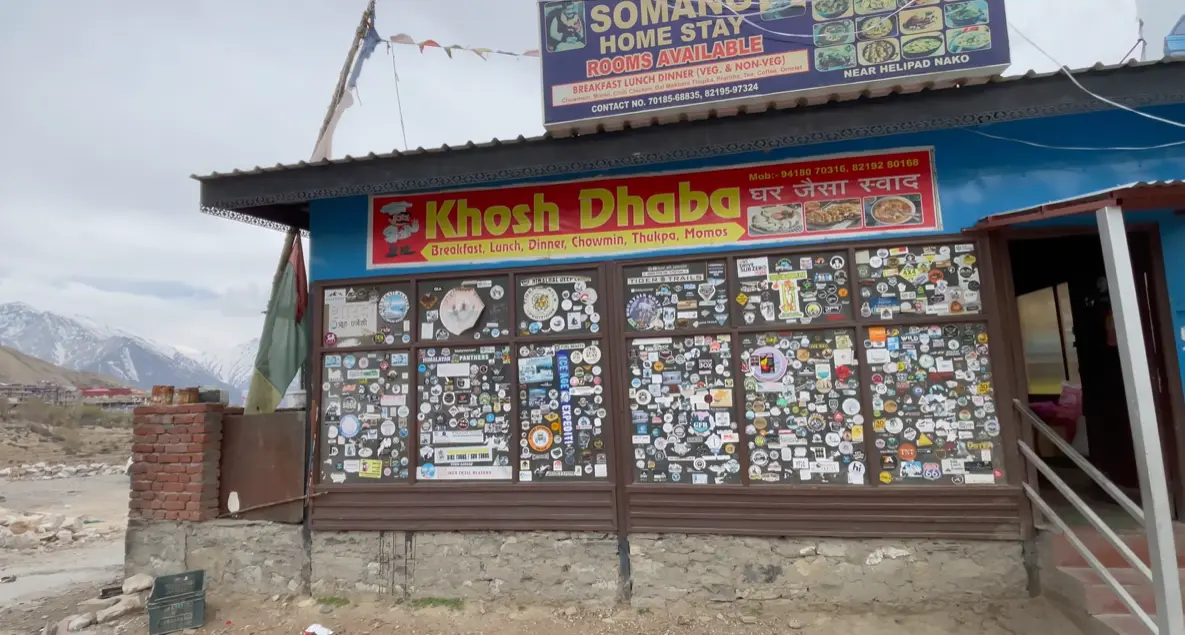
Since the lakeside food point was shut, we stopped at Khosh Dhaba near the Nako entrance. From outside it looked like a simple roadside place covered with traveller stickers. Inside, there was a proper dining area, and the rear side opened towards views of the village and snow-marked mountain range. You could also sit outside.
We ordered mixed noodles and vegetable thukpa. The photograph shows a plate of noodles and two bowls of soup on our table. I have not included a price because it was not stated clearly in the video, and guessing would make this guide less useful. Menus and rates in small seasonal places can change, so check before ordering.
The stop solved the practical problem we had at the lake: we wanted something hot before continuing towards Kaza and Pin Valley. The setting behind the dhaba was better than the plain front suggested. It is the kind of roadside meal stop that makes sense on this route, especially when facilities closer to the lake are closed.
Should you stay overnight in Nako?
Stay overnight if you want a slow village evening, intend to visit the monastery without watching the clock, or want to photograph the lake in different light. We saw several stay options in the village. A room with a genuine lake view could change the experience, especially if you can walk to the water early in the morning before vehicles and day visitors arrive.
Continue onward if Nako is a route stop and you arrive by noon, as we did. We had left Kalpa after breakfast, reached Nako around 12 or 1 pm and still had a larger target for the day: Mudh Village in Pin Valley. Spending a night here did not make sense for our schedule because the lake and immediate village area did not require that much time for us.
My decision should not become a rule for every traveller. Tour groups often break the long Kinnaur to Spiti journey here, and that can make the road plan more comfortable. Weather, road condition, daylight and how well you are adjusting to altitude matter more than squeezing another destination into the day. If the onward drive starts to look tiring, a simple room in Nako is more valuable than a rushed arrival elsewhere after dark.
How long should you keep for Nako?
For a through journey, keep about one to two hours. That gives you time to park, walk to Nako Lake, circle part of the shore, take photographs, see the monastery if accessible and stop for tea or a meal near the entrance. The village is compact, so you do not need a packed sightseeing plan.
Our lake visit itself was unhurried, yet it did not take long. There was no queue, no active boating counter and no open stall keeping us there. We looked around, walked beside the water and moved back towards the entrance for food. In a busier month, parking, boating or a longer monastery visit could extend that window.
If you stay overnight, let the place slow down naturally. Walk rather than drive within the tight lanes, return to the lake when the light changes and leave space for the monastery. Nako seems better suited to quiet observation than to ticking off a long list of attractions.
The best season depends on what you expect
I can only describe the conditions we experienced. The trees were beginning to show leaves, snow remained on the higher mountains, the sky was cloudy and the lake edge looked partly dry. It was calm, but it was not the frozen white scene people often associate with winter videos of Nako.
Winter may make the setting look more dramatic, but it also changes access, road risk, temperature and the availability of food or accommodation. I would not choose a winter journey only for a photograph without checking local road conditions and open stays immediately before travel. On a warmer-season road trip, Nako works well as a quiet break between longer driving sections.
Tourist activity also appears seasonal. The unused boats, closed lakeside structure and low number of visitors all pointed to a place not yet operating at peak pace. This gave us silence, which I liked, and fewer services, which was inconvenient. Decide which side of that trade-off matters more to you.
A practical Nako Village plan
- Leave Kalpa early enough to reach Nako around midday without hurrying.
- Turn off the main route and drive carefully through the narrow village approach.
- Park where your vehicle is not blocking the lane, then walk to the lake.
- Spend time around the shore, but do not count on boating or an open food stall.
- Visit the monastery if it is open and you have enough time to do so respectfully.
- Return towards the entrance for tea or lunch, then decide whether to stay or continue.
Carry drinking water, sun protection and a warm layer even if the lower part of your route feels comfortable. Weather can change quickly in the mountains, and cloud cover can disappear during a short stop. Cash is sensible for small eateries and local stays, though I did not document payment options at Khosh Dhaba and would not assume a digital connection will always work.
For directions, use the pinned destination for Nako Lake on Google Maps, then pay attention to local signs and parking conditions inside the village. The map gets you close, but it cannot make a narrow lane wider or tell you whether a seasonal stall is open.
Where Nako fits in a Kinnaur and Spiti trip
Nako made sense for us because it sat directly between our Kalpa stay and the next stage towards Pin Valley. We had spent a peaceful night at The Monk Resort near Kalpa, ate breakfast, started early and reached Nako with much of the day still available. That timing allowed us to stop without sacrificing the onward journey.
If you follow the same direction, Nako is a natural transition point. The greener slopes around Kalpa give way to a harsher, more open mountain landscape. After Nako, many travellers continue towards Tabo or Kaza. My Tabo Spiti travel guide covers another useful halt on that route, while the Tara Guest House Mudh review shows where we eventually stayed in Pin Valley.
Do not let a long itinerary force a bad driving decision. Our plan was based on reaching Nako around noon and assessing the day from there. If road work, weather or tiredness delays you, staying in Nako is a reasonable adjustment. Mountain plans need room to change.
What I liked, and what felt overhyped
I liked the silence most. There was no crowd pressing towards the same photo spot, and the cloudy weather made the walk comfortable. The trees, prayer flags, still water and snow-streaked mountains created a calm frame. Khosh Dhaba also turned out to be a useful stop, with hot noodles, vegetable thukpa and a better rear view than its roadside front suggested.
The lake itself felt overhyped in the conditions we saw. It was smaller and more ordinary than I expected, one side looked dry, the boating area was inactive and the nearby stall was closed. After the climb into the village, there was no single dramatic reveal that made me want to spend the rest of the day there.
That does not make Nako a bad stop. It means the right expectation is important. Come for a quiet high-altitude village, a small lake, the monastery and a break in a long road journey. If you arrive expecting a huge blue alpine lake surrounded by active cafes and activities, you may leave disappointed.
My verdict on Nako Village
I would stop at Nako again while travelling from Kinnaur towards Spiti, but I would treat it as a relaxed route halt rather than the main event. My Nako Village travel guide recommendation is simple: give it an hour or two, see the lake without exaggerated expectations, include the monastery if access allows, and eat near the entrance if the lakeside facilities are shut.
For our trip, continuing after lunch was the right call. Nako gave us quiet, a chance to stretch our legs and a useful pause before the road ahead. It did not feel like the Himalayan paradise promised by some photos, and that honesty is exactly why I would still include it: you can enjoy the place that is actually there, not the version created by a perfect season and a carefully chosen camera angle.
Sources and trip notes
The first-hand observations, route timing, food order and opinions in this article come from my visit and the embedded video. Altitude, district location, distance from Kalpa and the official description of Nako’s lake and temples were checked against the District Kinnaur administration page for Nako and Himachal Tourism’s Kinnaur guide. Seasonal operations, prices, road conditions and opening access can change, so confirm them locally before relying on them.