Tabo Spiti Travel Guide: 7 Honest Notes From My Visit
I had planned Tabo as a short stop between Nako and Mudh, not as the place that would make me question that plan. We had already been on the road since Kalpa, and Mudh was still ahead. Yet a few minutes inside Tabo were enough to make the village feel less like a checkpoint and more like somewhere I could have stayed.
This Tabo Spiti travel guide combines what I recorded during that visit with practical context from official sources. The video is right here at the top for anyone who wants to watch the village, monastery and food stop before reading the details.
My Tabo Spiti visit at a glance
- Route that day: Kalpa to Nako, Tabo, then onward toward Mudh village.
- Main stop: Tabo Monastery and the surrounding village lanes.
- What surprised me: the greenery, quiet courtyards, flower scent and snow-peak views beside the bare mountains.
- What we ate: laphing and potato cheese momos, plus a mango bought locally.
- My honest call: if choosing only one overnight stop between Nako and Tabo, I would lean toward Tabo based on this visit.
Why this Tabo Spiti travel guide starts with the village
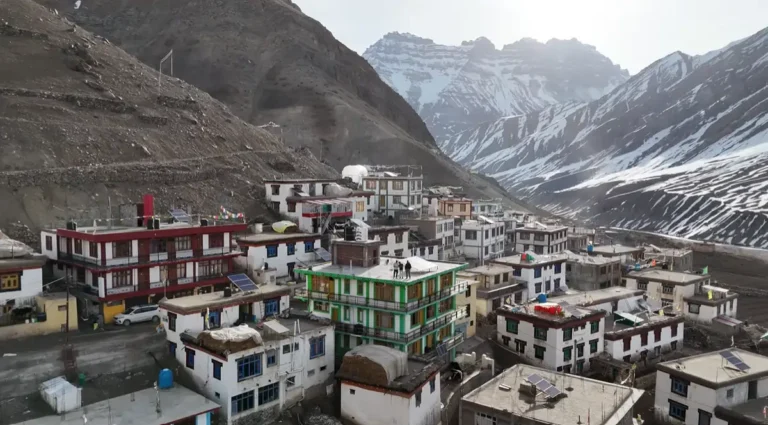
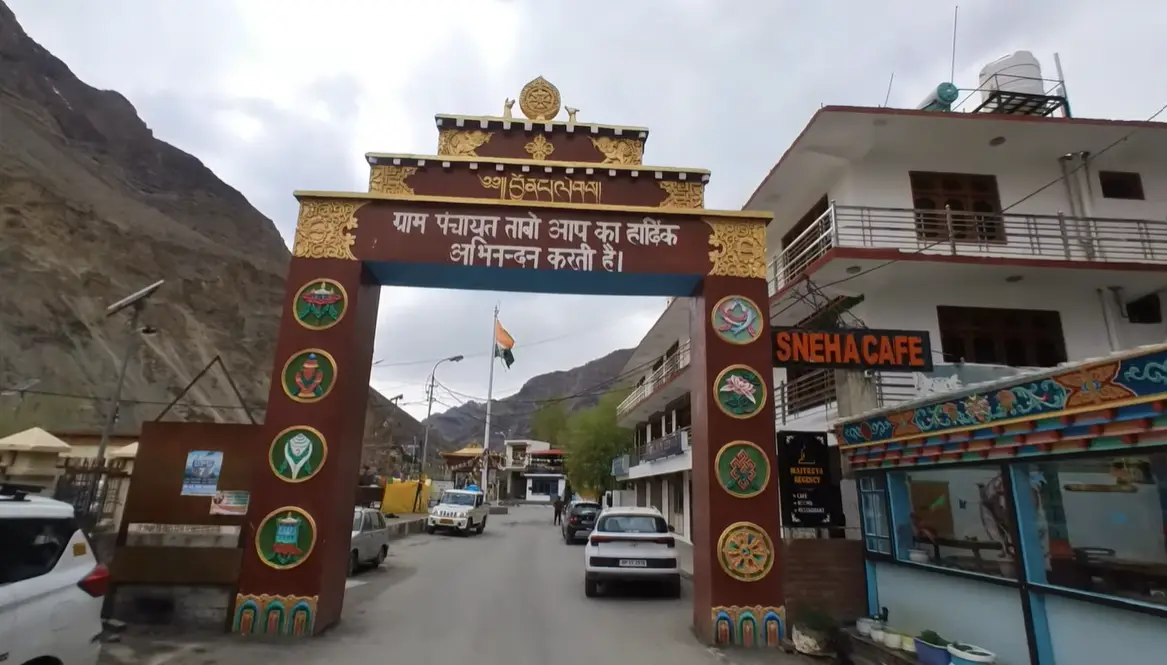
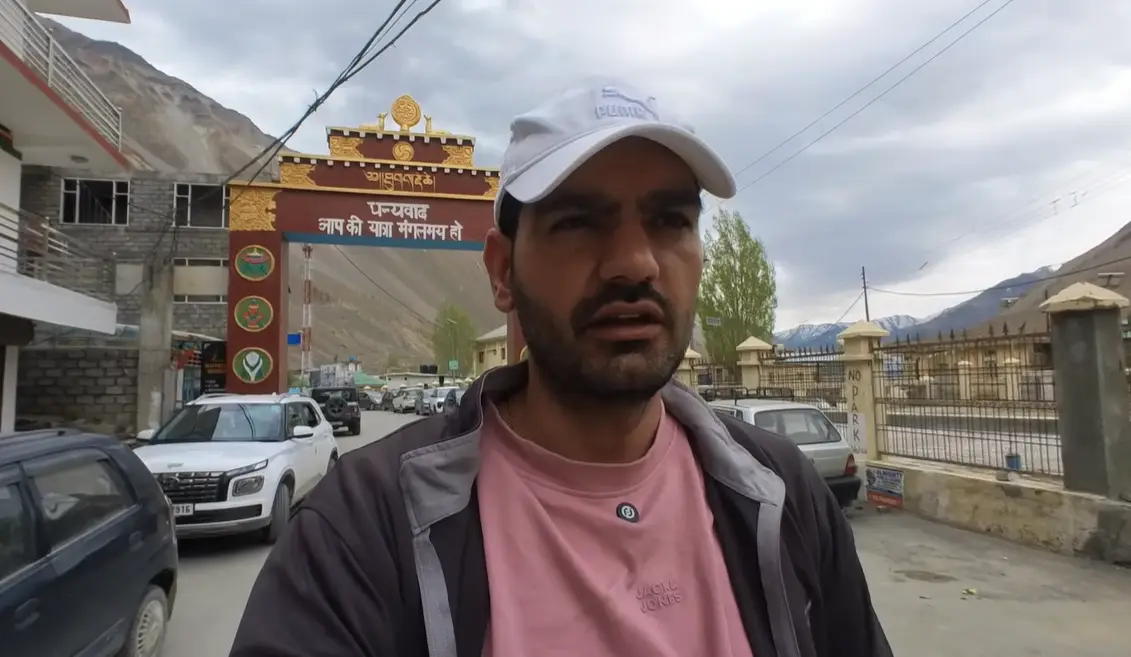
The entrance arch makes Tabo easy to recognise, but the change in atmosphere mattered more to me. After long stretches of dry mountain road, the village had trees, small cafes, parked vehicles and enough movement to feel lived in without feeling busy. Tabo Spiti is compact. I could see the monastery area, food options and places to stay within a short walk.
We weren’t checking into a room. Our plan was to continue to Mudh and find a stay there before evening, so I looked at Tabo as a traveller with limited time. That matters because my recommendation isn’t based on an overnight experience. It comes from walking around, seeing the setting and comparing the stop with Nako earlier on the same route.
The village also sits very close to the main road. In the video I estimated that the monastery turn was only around 100 to 200 metres inside. Treat that as my on-the-ground estimate, not a surveyed distance, but the practical point holds: this isn’t a detour that eats up half your day.
What I saw at Tabo Monastery
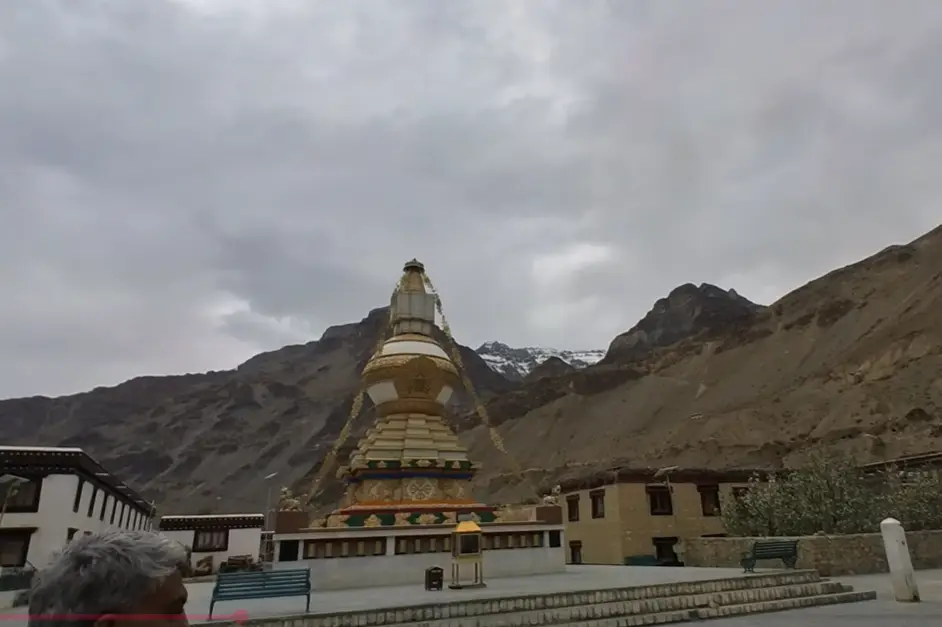
Tabo Monastery was the centre of our Tabo Spiti travel guide stop. The decorated gate led into a much quieter space, with low buildings, trees, flowers and a large white-and-gold stupa framed by stark brown mountains. Snow-covered peaks were visible farther away. That contrast is what stayed with me.
I noticed a pleasant floral scent as we walked. In the video we guessed that some of the trees might be apricot trees, but I couldn’t verify the species, so I won’t present that guess as fact. What I can say confidently is that the greenery softened a landscape that otherwise looked dry and severe.
The historic importance goes far beyond what a quick visit can reveal. An Archaeological Survey of India record describes the complex as having nine temples, a two-storey monks’ chamber and 23 chortens, with construction dated between 996 and 999 CE. The official monastery travel page places Tabo at about 3,280 metres. Those details helped me understand why this isn’t simply another photogenic stop in Spiti.
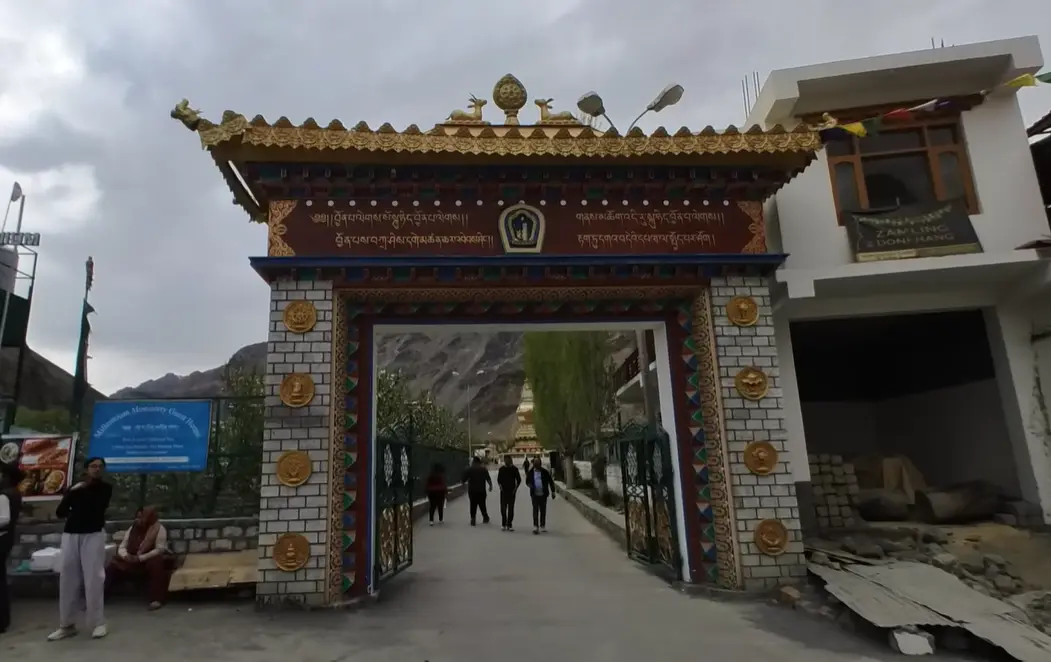
My footage focuses on the exterior spaces and stupa. I haven’t used it to claim that I studied every temple, mural or chamber in the complex. Anyone visiting for the art and history should allow more time than we did and follow the photography rules displayed or explained at the site. Religious spaces deserve that basic care.
The quiet was real, though not theatrical. People were walking through the grounds and the village outside had normal traffic. Still, once inside, the pace dropped. I found myself looking at the mountain line behind the stupa longer than expected. It was one of those unplanned pauses that made the day better.
Why Tabo appealed to me more than Nako
This Tabo Spiti travel guide includes a personal comparison, not a verdict on which village is objectively better. We had passed through Nako, where travellers often stop for the lake and monastery. On that particular day, I didn’t find the surrounding views as striking as the views I saw in Tabo. Tabo had snow peaks in one direction, bare mountain walls in another, and a calmer, greener monastery setting in between.
I said on camera that if I had to stop for the night, I would come ahead to Tabo instead of staying in Nako. I still think that reflects the visit fairly. Tabo looked scenic and had visible cafes and stay options, while keeping the feel of a small settlement.
There is an obvious limit to that opinion. I didn’t inspect rooms, compare tariffs or spend a night in either place on this leg. Road conditions, fatigue and your next day’s route can matter more than scenery. If arriving late, the safer decision is the stop you can reach comfortably, not the one a travel article declares prettier.
The food break: laphing, momos and some confusion
After the monastery, hunger took over during this Tabo Spiti travel guide visit. We had spotted laphing and decided to try it. The ordering conversation was a little chaotic, which is exactly how it appears in the vlog. We discussed a dry version and a version with gravy, asked about chilli oil, and tried to understand the fillings used in the rolled variation.
The vendor explained that one version could include Maggi and soya. We chose the preparation in front of us and asked for chilli according to taste. There was also a garlic-flavoured liquid or sauce mentioned during the preparation. Because the transcript is noisy at that point, I won’t claim a precise recipe. This was street-side tasting, not a controlled menu review.
The laphing tasted good to me. It had enough flavour to make the stop memorable, and the casual back-and-forth around the counter was part of the fun. No price is stated clearly in the footage, so I can’t responsibly publish one. Current menus and charges should be checked at the shop.
Next came potato cheese momos. My reaction was more restrained: they were okay. That is the honest version. The red chutney, however, was good and gave the momos more character. We also bought a mango and ended up joking about whether anyone actually eats mango peel. The tangent has little travel-planning value, but it captures the mood of the stop better than a polished list of “must-try foods” would.
Could you stay in Tabo?
Yes, Tabo had visible homestays, other accommodation signs and several places to eat when I visited. I didn’t stay there, inspect a property or verify current room rates. My evidence supports saying that options existed, not ranking them or promising any facility.
For readers using this Tabo Spiti travel guide while moving through the Spiti circuit, the village can make sense as more than a lunch stop. The monastery is close to the road, the settlement is walkable, and staying overnight would give you more time to visit without rushing onward. The official monastery site warns that winter access can be difficult and that August rain can bring dangerous road conditions and rockslides. Check current road and weather information before committing to a schedule.
Permit rules can depend on nationality and route. Permit guidance on the monastery website separates travellers by both nationality and approach road. It currently lists no Tabo permit for Indian citizens. For international visitors coming from the Shimla and Reckong Peo side, it advises arranging an Inner Line Permit. Recheck this with the district authorities shortly before leaving because the rule may change.
How I would fit this Tabo Spiti travel guide into a road trip
The route behind this Tabo Spiti travel guide began much farther back in Kalpa, continued through Nako and Tabo, and was meant to end in Mudh. That was a long travel day. It was possible for us, but it left little space for a slow monastery visit or an unhurried meal.
If your priority is the monastery, I would avoid treating Tabo as a ten-minute photo stop. Allow enough time to walk through the complex respectfully, pause at the stupa and eat in the village. If your route continues toward Pin Valley, read my Tara Guest House Mudh review for the room, food and valley-view experience at the end of that journey.
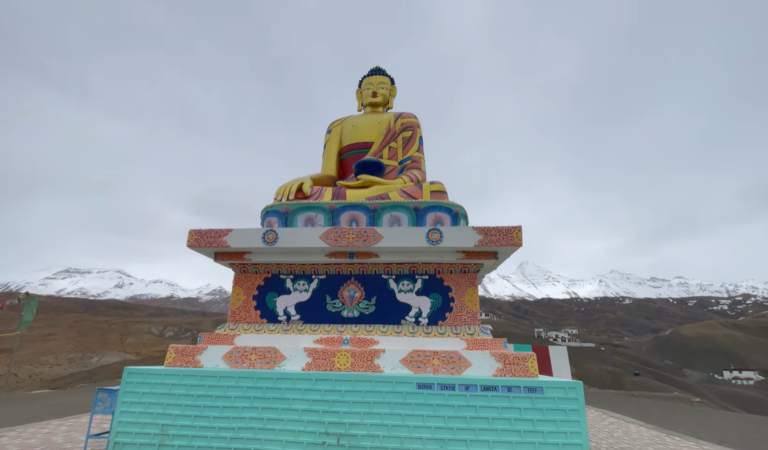
Travellers continuing toward Kaza can pair this with my Kaza one-day circuit, which covers Langza, Hikkim, Komic, Key Monastery and Chicham Bridge. The Langza village guide gives a closer look at the Buddha statue and Spaceship Cafe.
Practical things I would remember next time
First, don’t assume a short distance on a map means a quick drive in Spiti. Weather, road work and rockfall can change the day. The official route guidance for Tabo specifically recommends checking current conditions and adjusting plans when needed.
Second, carry cash and basic supplies. I saw cafes and stay options, but I didn’t verify card acceptance, ATM reliability or mobile coverage during this visit. Remote-area services can change. A backup payment method and some food and water in the vehicle are sensible without turning the trip into an expedition.
Third, keep extra time for altitude and walking slowly. Tabo is around 3,280 metres according to the official monastery page. I haven’t offered medical advice here because altitude response varies. If you feel unwell, stop pushing the itinerary and seek appropriate help.
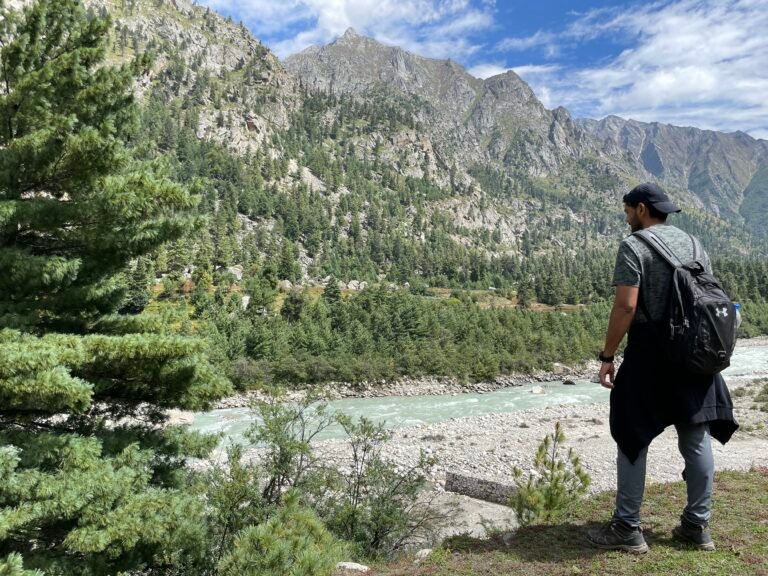
Finally, ask before photographing sensitive interiors or people. My attached photographs show public exterior spaces, the entry gates, the stupa and my own visit. The old artwork is part of a living religious complex, not a backdrop that exists only for cameras.
What the short visit changed for me
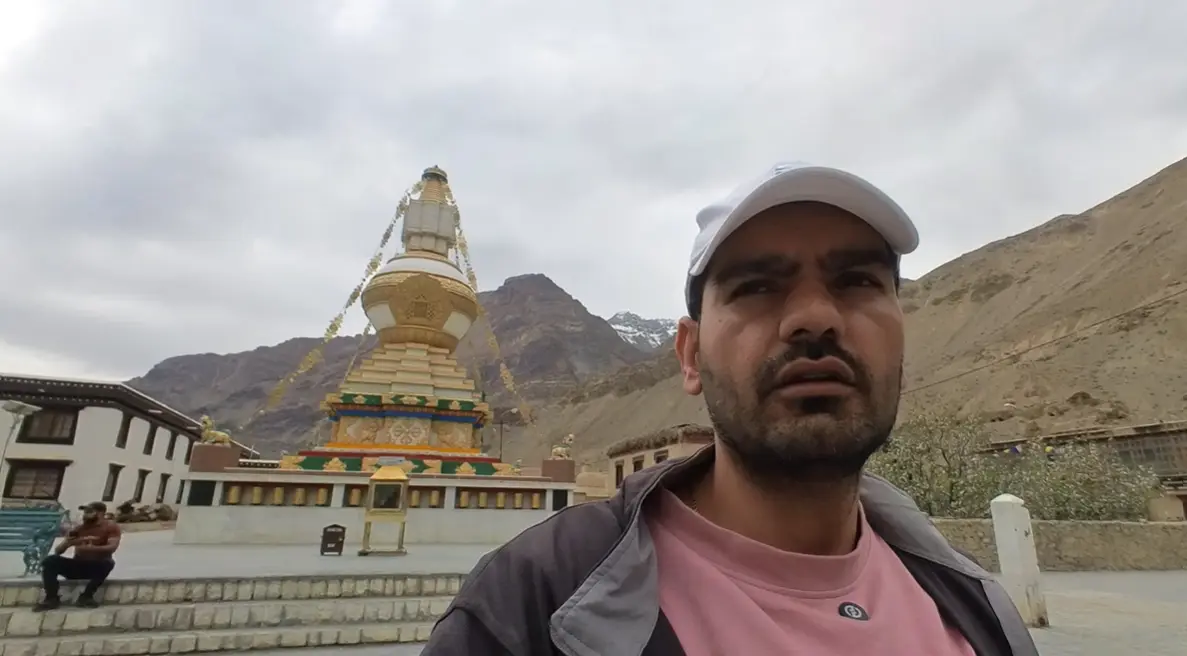
I arrived in Tabo thinking about the kilometres still left to Mudh. I left thinking we had cut this stop too short. The monastery grounds felt calm, the surrounding peaks looked better than I expected, and even the slightly messy food tasting gave the place a human rhythm that a viewpoint alone cannot provide.
Would I tell everyone to cancel Nako and stay in Tabo? No. The right stop depends on your route, daylight and energy. But if I repeat this journey with more time, I would plan a night in Tabo, walk the village without watching the clock and return to the monastery when the day is quieter. That is a stronger recommendation than I expected to make when we drove under the entrance arch.
Tabo Spiti travel guide questions travellers often ask
Is Tabo Monastery close to the main road?
It felt very close during my visit. I estimated the turn and short approach at roughly 100 to 200 metres, but that is a personal estimate rather than an official measurement. It was an easy stop on our onward route.
Is Tabo worth an overnight stay?
Based on this Tabo Spiti travel guide visit, the scenery, calm monastery setting and visible food and stay options, I would consider it. I only made a daytime stop, so I cannot review the night-time experience or recommend a specific room from this visit.
What did you eat in Tabo?
We tried laphing and potato cheese momos, and bought a mango locally. I liked the laphing and red chutney. The momos were okay rather than exceptional. The video does not give a clear final price.
What is special about Tabo Monastery?
The ASI record dates the complex to roughly 996 to 999 CE and describes nine temples and 23 chortens. For me, its quiet ground-level setting, greenery and mountain backdrop made the short visit memorable.
Can foreign travellers visit Tabo without a permit?
The monastery website currently describes a route-based rule for international visitors. It says the Manali and Kaza approach does not require a permit, while entry from the Shimla and Reckong Peo side requires an Inner Line Permit. Confirm the latest position with the district authorities before departure.
Sources checked: Tabo Monastery route and permit guidance, Himachal Tourism’s Spiti Valley page, and the ASI monument record for Buddhist Monastery, Tabo.