DJI Osmo Action 6 Adventure Combo Review: First Look
I bought the DJI Osmo Action 6 Adventure Combo because my GoPro Hero 10 Black had started showing its age, particularly indoors and in low light. I also wanted a dedicated camera that would not stop a shoot because my phone storage was full. This is my unboxing and first-use review, so I am separating what I have actually handled and recorded from the longer-term verdict that still needs more travel footage.
Affiliate disclosure: I may earn a commission if you buy through this link, at no extra cost to you. The price can change, so check the current listing before ordering.
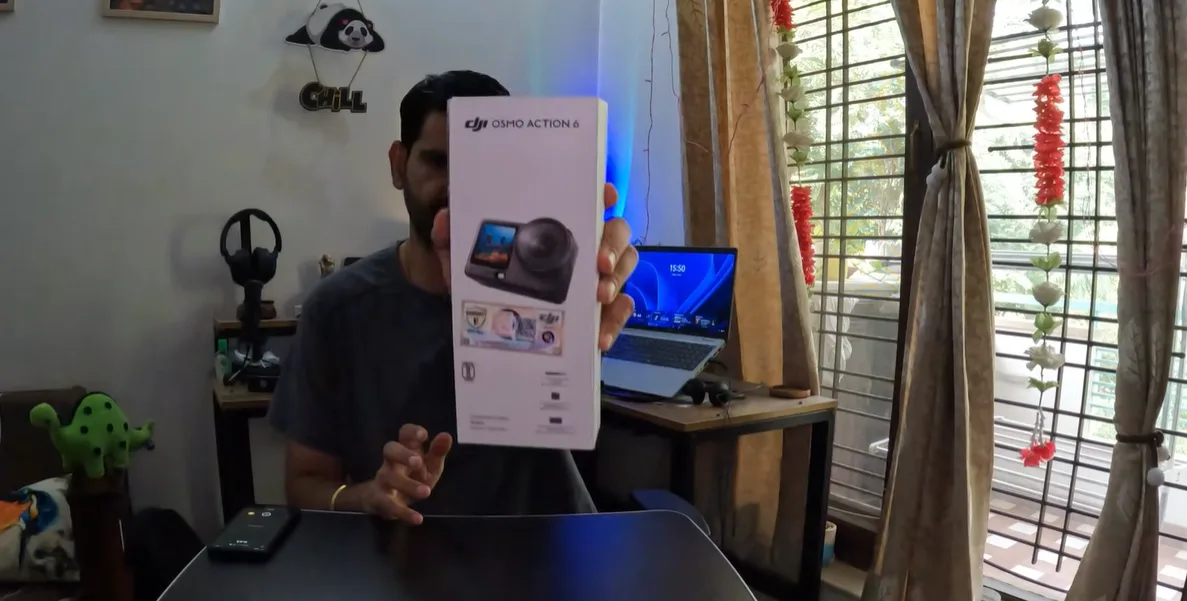
My quick verdict after unboxing it
The Adventure Combo makes sense for the way I shoot. Three batteries, the charging case and the extension rod are useful when I am outside for hours and cannot keep returning to a socket. The camera itself feels compact, light and rigid. Both the front and rear screens also matter when I switch between filming a place and speaking to the camera.
This is not my final verdict on image quality, stabilization, heat or real battery endurance. The video includes a short sample recorded on the camera with its built-in microphone, and the daylight difference was easy to notice next to my older setup. A few minutes of sample footage cannot replace repeated use across trips, traffic, low light and longer recording sessions. I will judge those parts after the camera has travelled with me.
Why I changed my travel camera
I was still filming on a GoPro Hero 10 Black. It has served me for a long time, but grain and weak low-light results had become hard to ignore. A phone can produce good footage, yet using it as the main travel camera creates another practical problem. Storage fills up, personal files compete with video clips, and the device I need for calls, maps and bookings is also doing all the recording.
I prefer a simple division of work. The phone remains available for travel tasks, while a dedicated camera records the journey. Since cafes, restaurants and road trips are regular parts of this channel, the upgrade was not about buying a gadget for one unboxing. I needed something that could become part of the normal shooting kit.
Low-light performance was one reason I looked at the Action 6, but I am not calling it solved yet. DJI lists a 1/1.1-inch square CMOS sensor and a variable f/2.0 to f/4.0 aperture. Those are official specifications, not conclusions from my own long-term testing. The sensible next step is to compare footage in the situations where my Hero 10 struggled, including dim restaurant interiors and evening streets.
What came in my Adventure Combo box
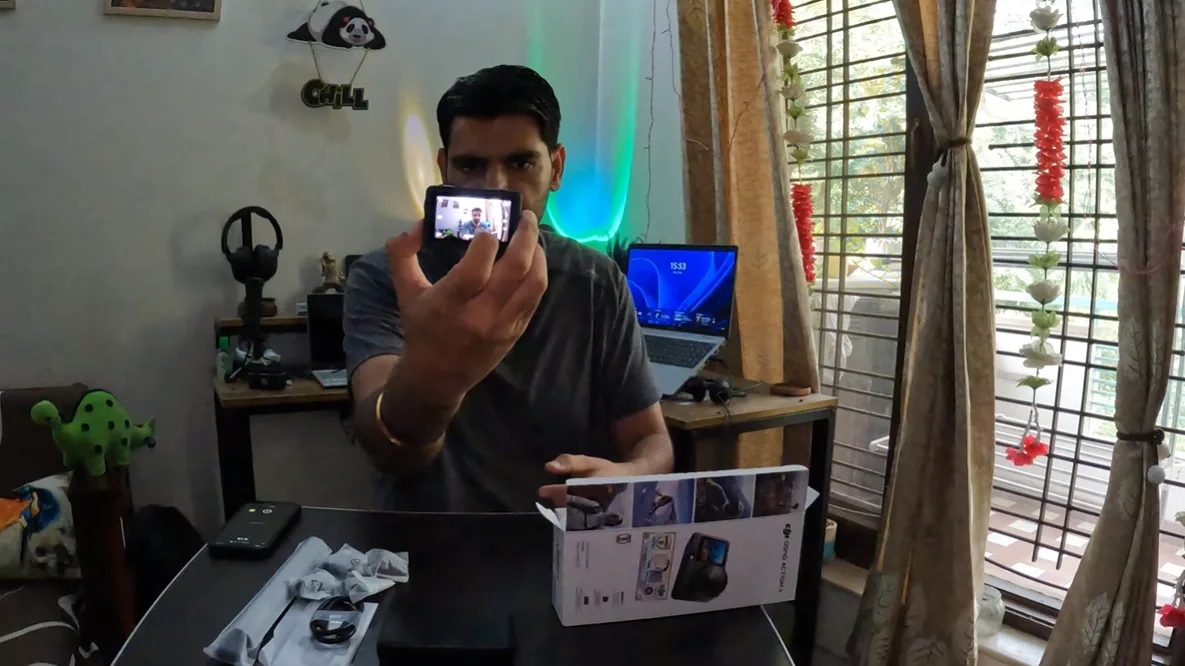
Amazon had already opened the package for inspection before I recorded the unboxing, so one protective sticker had been removed. The packing itself still looked proper, and the main unit arrived in black. Inside my box I found the camera, three batteries, a compact charging case, an extension rod, two magnetic quick-release mounts, locking screws, an adhesive mount, a USB-C cable and the usual printed material.
The official DJI store lists the same core Adventure Combo contents: one camera, three Extreme Battery Plus units, two dual-direction quick-release adapter mounts, a curved adhesive base, two locking screws, a USB-C to USB-C cable, Multifunctional Battery Case 3, a 1.5-metre extension rod and an anti-slip pad. Checking the official list is useful because marketplace bundles and seller descriptions can change.
| Included item | Why it matters to me |
|---|---|
| Three batteries | More practical backup for outdoor shoots and travel days |
| Multifunctional charging case | Keeps the batteries together and makes charging easier |
| 1.5-metre extension rod | Useful for walking shots, wider framing and self-recording |
| Two magnetic mounts | Faster changes between handheld and mounted setups |
| USB-C cable and mounting hardware | The basic pieces needed to charge and start building a working kit |
The battery case was one of the better parts of the package for me. It is compact, holds all three batteries neatly and avoids loose batteries moving around a travel bag. The extension rod is also something I expect to use, although its real value will depend on how often I choose it over a shorter grip.
The camera in hand
My first physical impression was positive. The body is small enough for travel, does not feel flimsy, and the front screen makes self-framing easier. DJI gives the camera a listed weight of 149 grams and dimensions of 72.8 by 47.2 by 33.1 millimetres. Those official numbers match the compact impression, but the useful question is how it feels after a long handheld recording session.
The camera has touchscreens on both sides. DJI lists a 1.46-inch front display and a 2.5-inch rear display. I showed the front screen working during the unboxing, and it is helpful when the lens is pointed back at me. That sounds obvious until you have recorded a full piece to camera with poor framing.
The official specification page also lists 64 GB of built-in storage, with 50 GB available, plus microSD expansion up to 1 TB. Built-in storage is a useful fallback if a card is missing or full. I still plan to use a proper memory card for travel shoots rather than treating internal capacity as the main recording space.
The accessories I bought separately
I ordered extra mounts, another magnetic clip, screen guards for the front and rear displays, and a USB-C male-to-female adapter. These were not all part of the Adventure Combo. That distinction matters because an unboxing can easily make separately purchased accessories look like standard box contents.
The USB-C adapter solves a specific problem in my setup. I have been using a Hollyland wireless microphone for quite some time. Its receiver does not sit conveniently against the camera body when connected directly, so the short adapter creates enough room to attach it without an awkward fit. I demonstrated the connection in the video.
DJI microphones can connect through the company’s OsmoAudio system without attaching a receiver. DJI says the camera can connect directly to two compatible transmitters. That is useful if you already own the right DJI microphone, but it does not make my Hollyland system unusable. It simply means I need the adapter and receiver.
What the first sample actually tells me
Near the end of the video I switched to the Osmo Action 6 and recorded with the camera microphone, without an external mic. The short indoor and outdoor clips give a first idea of colour adjustment, clarity and how the camera reacts when moving between lighting conditions. In daylight, the change from my older camera was noticeable.
I am deliberately keeping that claim narrow. I did not run a controlled side-by-side test with matching settings. I did not record a full night walk, a long drive, rain, water or hours of continuous footage. I also have not yet measured how much battery remains after shooting at demanding resolutions. Calling this a complete performance test would be misleading.
DJI states that the camera can record up to 8K, supports 4K at up to 120 fps in relevant modes, and offers RockSteady 3.0, RockSteady 3.0+, HorizonBalancing and HorizonSteady. Its claimed maximum operating time is 240 minutes under controlled 1080p/24 fps conditions with several features switched off. Real travel use will involve screens, wireless connections, stabilization and changing temperatures, so I expect actual endurance to differ.
Who should consider the Adventure Combo
The bundle looks better suited to creators who spend long periods outside, move between locations or cannot charge after every short recording. If you mainly film one or two clips at home, three batteries and a long extension rod may be more equipment than you need. The standard bundle deserves a price comparison before you decide.
For my work, battery backup is not decorative. A restaurant visit cannot be repeated just because the only battery died before the food arrived. A road-trip stop may happen once. Carrying three charged batteries reduces that risk, and the case keeps the arrangement manageable.
The camera may also suit someone who wants to keep the phone free while travelling. It is less convincing as a purchase if your main priority is still photography or if a recent phone already handles every video situation you encounter. An action camera earns its place through compact mounting, stabilization, quick operation and repeatable recording, not merely because it is another camera.
What I like so far, and what remains uncertain
The compact build, front screen, magnetic mounting system and three-battery package all fit my intended use. I also like having a charging case instead of carrying separate cells. The camera felt solid during handling, and the first daylight footage encouraged me to take it on upcoming journeys.
The uncertainty is just as important. The Action 6 is expensive enough that a short unboxing cannot answer whether it is good value. The Amazon price may change, which is why I am not freezing a current selling price into the review. Long recording sessions, heat, night footage, stabilization while walking and the complete audio workflow still need proper use.
- Positive so far: compact body, useful front screen, three batteries, organised charging case and quick magnetic mounting.
- Needs more testing: low-light improvement, battery endurance at my settings, heat, stabilization during travel and built-in microphone quality outdoors.
- Small setup issue: my Hollyland receiver needs a USB-C extension adapter to fit comfortably.
Buying advice before you choose
Start with your shooting pattern, not the longest specification list. If you record travel days, motorcycle footage, hikes or events where charging is inconvenient, the Adventure Combo’s extra batteries and rod have a practical purpose. If your camera stays near a socket, calculate the price difference against the standard bundle and add only the accessories you will use.
Check the seller, warranty terms, return conditions and exact items in the listing. Marketplace prices and offers move frequently. The Amazon link at the top opens the Adventure Combo listing I verified while preparing this post, but you should still confirm the product title and package contents before payment.
It is also worth budgeting for the less exciting pieces. A suitable microSD card, screen protection, a carrying case and any microphone adapter can change the real cost of the setup. I ordered screen guards because both sides have displays. I also added mounts based on the shots I expect to take, rather than assuming the box would cover every situation.
My first-look verdict
The DJI Osmo Action 6 Adventure Combo looks like a sensible upgrade for my travel and food videos, mainly because it combines a compact camera with enough battery backup for longer days. It solves the phone-storage problem and gives me a front screen, quick mounts and a dedicated kit that can stay ready between shoots.
I am not yet calling it the best action camera or giving it a final score. The first footage is promising, but the next journeys will decide whether the low-light results, stabilization, audio and endurance justify the purchase. That follow-up matters more than the unboxing. For now, I can recommend considering the bundle if your shooting routine genuinely needs the extra batteries and extension rod, while keeping the standard combo in the comparison if it does not.
For the manufacturer’s current technical information, see the official DJI Osmo Action 6 specifications. I will update this page after more real trips rather than create a separate companion Vlog post, so the buying notes, video and longer-term experience remain together.