Egg Shakshuka Recipe: My Cheesy Indian-Style Version
The tomatoes had softened, the onion had picked up colour and the base was ready, but this recipe still had one slightly awkward moment left. Three eggs had to go straight into a small pan without breaking the yolks or disturbing the sauce too much. Once they settled into place, the rest became simple: low heat, a lid, coriander, green chilli and enough cheese to melt across the top.
This is my egg shakshuka recipe with an Indian home-kitchen touch. I made the tomato base with ghee, onion, garlic and familiar powdered spices, then finished it with a cheese slice and mozzarella. I served it with methi parathas because it was winter, although toast or bread would make an easier pairing on another day.
The short answer
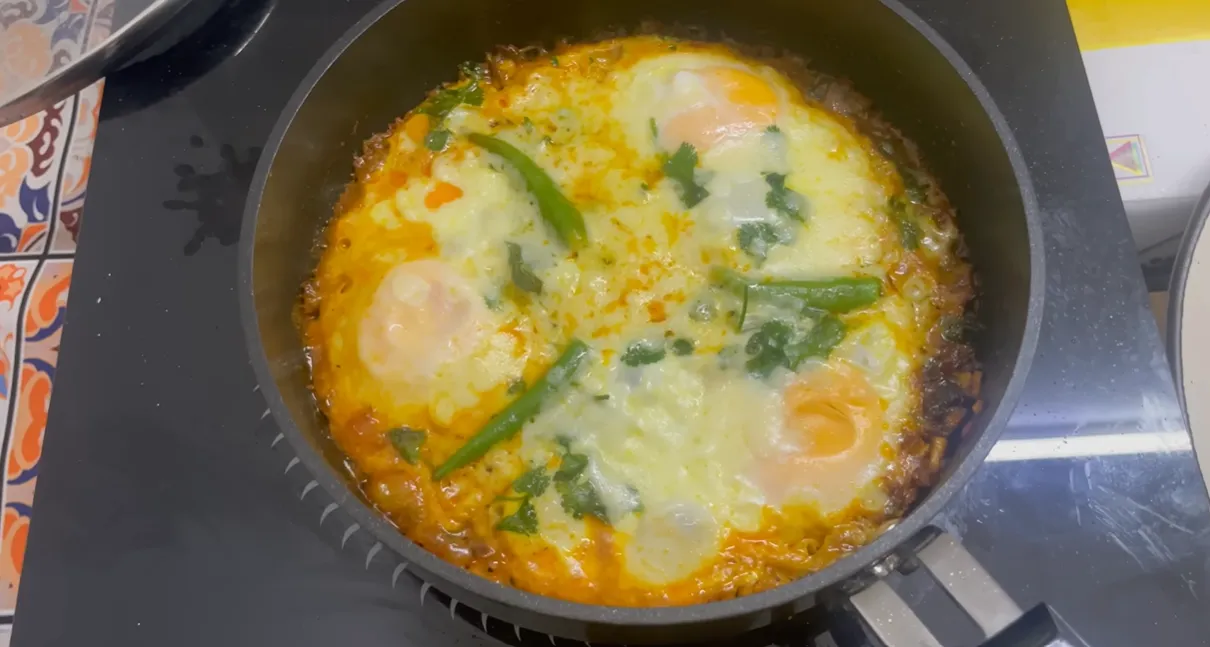
You can make this version of egg shakshuka in one pan by cooking garlic and onion in two tablespoons of ghee, softening two tomatoes, peeling and mashing them, seasoning the sauce, melting in one cheese slice and then cooking three eggs gently under a lid. Coriander, green chilli and mozzarella finish the dish.
It is not a strict traditional version. My pan uses Indian spices, including turmeric, coriander powder and a little chicken masala, and I chose methi parathas instead of pita or crusty bread. The method still follows the central idea of shakshuka: eggs cooking directly in a seasoned tomato base.
What I used
The ingredient list is short, but a few quantities in the video were added by eye. I have kept them that way below instead of pretending I measured amounts that I did not measure. Adjust the chilli and salt to your taste, and keep the water modest so the tomato base does not become runny.
| Ingredient | Quantity used | Purpose in my version |
|---|---|---|
| Desi ghee | 2 tablespoons | For cooking the garlic, onion and tomatoes |
| Onion | 1 | Forms the savoury base |
| Tomatoes | 2 | Cooked, peeled and mashed into the sauce |
| Garlic | A few cloves | Added first and cooked lightly |
| Eggs | 3 | Cooked directly in the tomato base |
| Cheese slice | 1 | Melted into the sauce for creaminess |
| Mozzarella | A little | Added on top near the end |
| Fresh coriander | As needed | Mixed into the base and used for garnish |
| Green chilli | To taste | Used as a fresh finishing chilli |
| Salt | To taste | For seasoning |
| Red chilli powder | A little | For heat and colour |
| Coriander powder | A little | For the tomato masala |
| Turmeric | A little | Part of my Indian seasoning |
| Chicken masala | A little | A spice blend used in the sauce, despite this being a meat-free base |
| Water | A small splash | Loosens the sauce without thinning it too much |
I used desi ghee, but you can use an oil that suits your cooking. The flavour will shift slightly, which is fine. The eggs and tomato base matter more than forcing one particular cooking fat.
Start with the tomato and onion base
Cut both tomatoes into halves before starting. Heat the ghee in the pan, add the garlic and let it cook until it begins to turn light brown. Do not push it until dark because it will continue cooking after the onion goes in.
Add the chopped onion and cook until it also begins to brown. This step gives the sauce more depth than simply boiling everything together. I then placed the tomato halves in the pan, covered it and let them soften for roughly two to three minutes.
The covered-pan method does two jobs. Steam loosens the tomato skins, and the flesh becomes easier to crush into the onion and garlic. Check the bottom if you are using a pan that tends to catch. Mine was non-stick, so I could leave it covered briefly without having to stir every few seconds.
Peeling the tomatoes without turning it into a chore
Once the tomatoes soften, lift away the skins. They should separate more easily after that short covered cook. Mash the flesh directly in the pan and combine it with the onion and garlic. A very ripe tomato will collapse quickly. A firmer one needs a little more pressure and time.
There is another route if you dislike peeling hot tomatoes over a pan. Boil them separately, remove the skins and use the peeled tomatoes as a rough puree. I mentioned this option in the video because it removes some fiddling at the stove. It also makes sense when you are preparing a larger batch.
I prefer the direct method for this small pan because it keeps the washing up limited and lets the tomato juices stay with the cooked onion. It is slightly messy, yes, but not difficult.
Seasoning my Indian-style shakshuka
After mashing the tomatoes, I added salt, red chilli powder, coriander powder, turmeric and a small amount of chicken masala. The last ingredient is a packaged spice blend here, not chicken. Check the label if you need to confirm that your chosen blend matches your dietary requirements.
The transcript does not contain measured spoon quantities for these spices, so I will not create fake precision. Begin cautiously, especially with salt and chilli. You can add more before the eggs go in, but removing an aggressive amount is much harder.
Add a small splash of water and keep the pan on low heat. The sauce should remain thick enough to hold the eggs in separate areas. If it looks like soup, there is too much water. Let excess moisture cook away before moving forward.
Why I put cheese into the sauce
I added one cheese slice to the tomato mixture and stirred until it melted. This is not an attempt to present the recipe as traditional shakshuka. I wanted a creamier sauce and a flavour that would work with the spicy masala and methi paratha.
The cheese softens the sharper edge of the tomato and chilli. It also thickens the base slightly as it melts. If you skip it, you will still have eggs in a tomato-onion sauce, but the final texture and taste will be different from the version shown here.
Once the slice had disappeared into the sauce, I mixed in chopped fresh coriander. At that point the base was ready for the eggs.
Crack the eggs straight into the pan
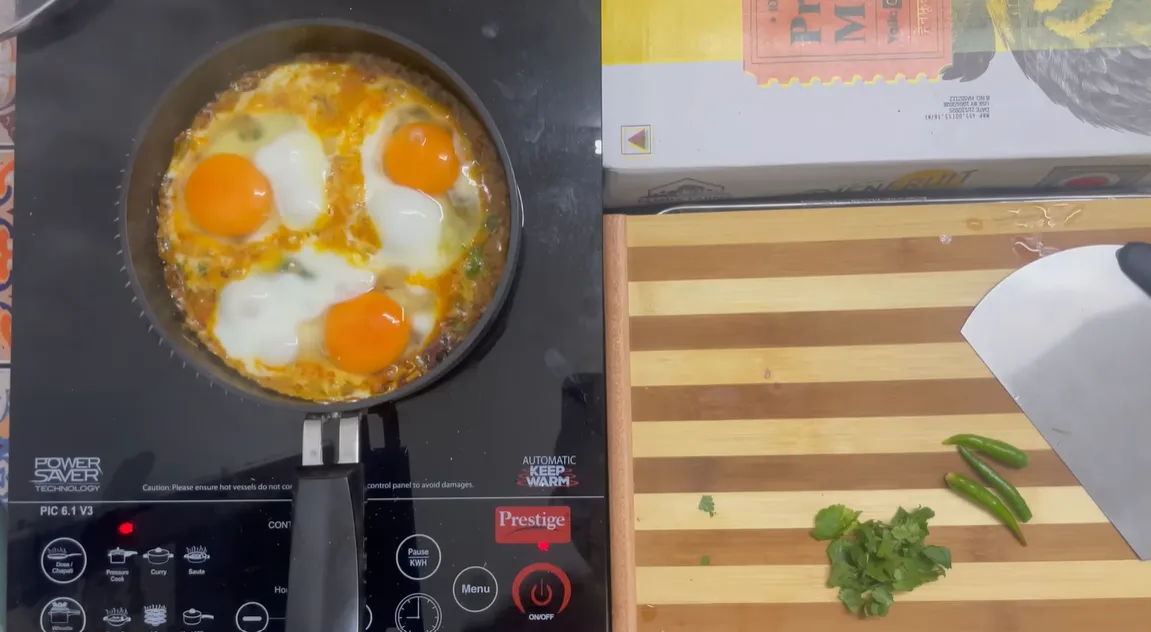
Lower the heat before adding the eggs. Crack them one at a time into separate parts of the tomato base. I used three, which fit the small pan without crowding one another too badly. The whites will spread a little, while the yolks should remain visible.
Cover the pan and let the eggs cook gently. The video does not give a fixed number of minutes for this stage because pans, flames and preferred yolk texture differ. Watch the whites rather than trusting a made-up timer. They should lose their transparent appearance and set around the yolks.
Food safety matters more than making a photograph look fashionable. FSSAI’s consumer guidance advises cooking eggs until the yolk and white are firm. If you prefer a softer yolk, use eggs suitable for that preparation and make your own informed choice, but do not treat a runny centre as automatically safe.
The final layer
When the eggs were close to ready, I scattered more coriander and placed green chillies on top. I like fresh green chilli, so it stayed visible in my pan. You can reduce it or leave it out if you want the red chilli in the sauce to provide all the heat.
A little mozzarella went over the eggs, then I covered the pan again. The remaining heat melted the cheese and brought the surface together. The sauce had a rich orange-red colour, the whites were set and the melted cheese sat across the top rather than disappearing completely.
This is the moment to stop cooking if the eggs are done to your preference. Leaving the covered pan on heat for too long can make the whites rubbery and dry the sauce around the edges.
My full cooking method
- Cut two tomatoes into halves and prepare the onion, garlic, coriander and green chilli.
- Heat two tablespoons of desi ghee in a small pan.
- Add a few garlic cloves and cook until they begin to turn light brown.
- Add one chopped onion and cook until lightly browned.
- Place the tomato halves in the pan, cover and cook for about two to three minutes, checking that the base does not stick.
- Remove the loosened tomato skins, then mash the softened flesh into the onion and garlic.
- Add salt, red chilli powder, coriander powder, turmeric and a little chicken masala.
- Add a small splash of water, keep the heat low and mix.
- Add one cheese slice and stir until it melts into the tomato base.
- Mix in some fresh coriander.
- Crack three eggs directly into separate areas of the sauce.
- Cover the pan and cook gently until the eggs reach a safe level of doneness.
- Finish with coriander, green chilli and a little mozzarella.
- Cover once more only long enough to melt the mozzarella, then serve hot.
The places where this recipe can go wrong
Garlic can become bitter if it is browned too aggressively at the beginning. Keep it moving and add the onion once the colour starts changing. The onions also need some patience. If they remain raw, their sharpness will sit awkwardly against the softened tomato.
The tomato stage needs judgment. Unripe tomatoes take longer to mash and may produce a thinner, sharper sauce. If the tomatoes release a lot of water, reduce the base before adding the eggs. The eggs need a sauce that can support them rather than swallowing them.
Heat is the other easy mistake. High heat may catch the tomato masala underneath while the egg whites on top are still uncooked. Low heat and a lid allow the trapped steam to work from above. Check periodically rather than opening the lid every few seconds.
Finally, be restrained with cheese and salt. A processed cheese slice, mozzarella and chicken masala can each contribute seasoning. Taste the sauce before cracking in the eggs, because stirring becomes difficult afterward.
What to serve with it
Toast, plain bread or another flatbread can scoop up the eggs and tomato sauce. I chose methi parathas. Winter methi made that pairing feel natural at home, and the paratha could carry the creamy sauce without falling apart.
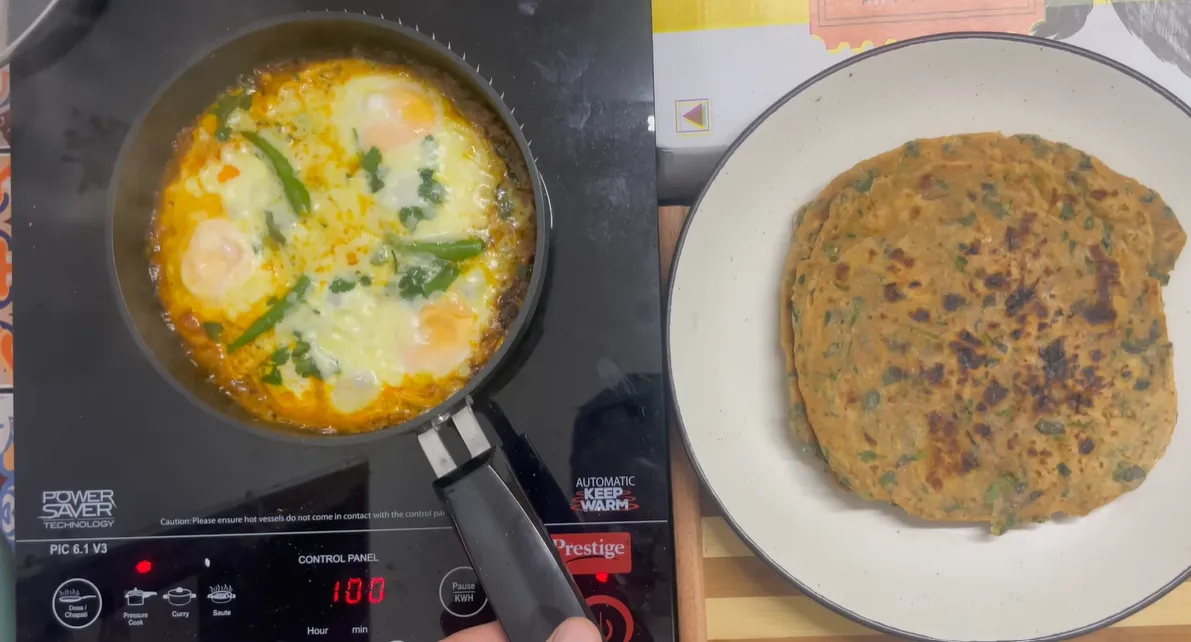
The combination is heavier than serving it with a thin piece of toast, so choose according to the meal. With parathas, I would treat the pan as a proper breakfast or lunch rather than a small side. With toast, it can feel lighter and quicker.
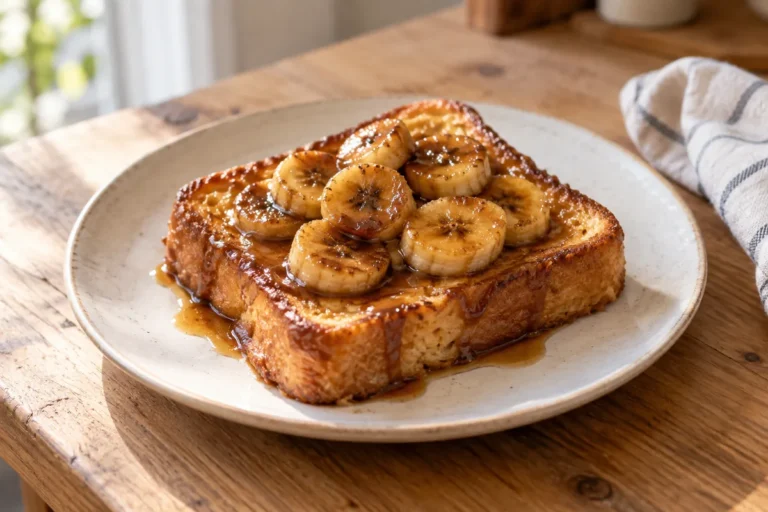
If you enjoy sweet breakfasts too, my caramelised banana milk toast recipe uses another simple stovetop method and gives you a very different option.
Is this an authentic shakshuka?
No, I would call it my Indian-style cheesy egg shakshuka rather than a claim of strict authenticity. Common versions use eggs poached in a tomato sauce with peppers and spices, while regional and household recipes vary. My pan uses fresh tomatoes, Indian powdered spices, a processed cheese slice, mozzarella and methi parathas.
That difference is intentional. The purpose was to make a one-pan egg meal with ingredients and flavours I use at home. Calling the variation clearly is more honest than presenting every substitution as part of a traditional formula.
Egg handling deserves a sensible note
In the video I spoke about choosing eggs carefully. The useful practical advice is simpler than repeating alarming claims from reports without checking each one. Buy eggs from a source you trust, reject cracked or dirty eggs, keep your hands and work surface clean, and cook them properly.
The FSSAI consumer food-safety guidance advises separating raw eggs from ready-to-eat food and cooking eggs until both yolk and white are firm. That is a better reference point than judging safety from appearance alone.
Watch the complete method
The video shows the tomato-peeling method, the consistency of the masala, how the three eggs sit in my small pan and the amount of cheese I used. Those visual details are useful because several spice quantities were added by eye.
For the shorter, video-first version with quick cooking notes, open the companion egg shakshuka recipe video.
Would I make it this way again?
Yes. The one-pan method is practical, and the methi paratha pairing worked for the season. I would still watch the salt more carefully than the chilli because two kinds of cheese and a spice blend can make the sauce saltier than expected.
The part I would not rush is the tomato base. Softening, peeling and mashing the tomatoes creates the texture that holds everything else together. Once that is right, the eggs and cheese need very little handling. Bring the pan to the table while it is hot, tear a piece of paratha, and start from the saucy edge before the cheese firms up.