Hatu Peak Narkanda: Temple, Sunset and the Road Warning
Hatu Peak Narkanda was our late-day stop after after starting from Chandigarh that morning. The light was already turning soft, the snow-marked ranges were visible in the distance, and the first thing I thought was that this was exactly the sort of short turn people can easily skip while rushing through Narkanda. The views made the detour worthwhile. The drive up, however, deserves a serious warning.
Is Hatu Peak Narkanda worth visiting?
Yes, especially if you want broad Himalayan views, a quiet temple visit and a sunset stop without committing to a long trek. Cars can reach close to the temple, and the remaining walk is short. The final road is steep and extremely narrow, so the place is easy to recommend but the self-drive is not suitable for everyone.
We arrived when the crowd was light. That changed the experience for me. There was space to walk around the temple complex, look toward the snowy mountain range and wait for the winter line to become visible without constantly moving aside for groups. On a busier day, the viewpoint would still be beautiful, but the road and limited passing space could become stressful.
Our route to Hatu Temple
Hatu Peak Narkanda is reached by taking a turn from the Narkanda area and climbing through the forest toward Hatu Mata Temple. The Incredible India Hatu Peak page identifies it as a key Narkanda attraction, while published travel references commonly place the peak roughly 7 kilometres from Narkanda, but road conditions, traffic and where you begin counting can change the practical distance. I would plan this as a half-day local outing instead of squeezing it into a rushed thirty-minute stop.
Most of the drive feels scenic and manageable if you already have hill-driving experience. The last stretch is the part I kept talking about in the video. For roughly 5 to 6 kilometres, the road becomes narrow enough that two vehicles meeting each other can create an awkward situation. You may need to reverse, find a wider patch or hold close to the edge while the other vehicle passes.
We drove up ourselves, but I would not casually recommend that choice to a driver who is nervous on steep single-lane mountain roads. Taking a local taxi from Narkanda, or from the point where the narrow climb begins, is the calmer option. You can enjoy the forest and the views instead of spending the entire climb watching for the next vehicle.
My honest takeaway: the destination is easy to like, but the final road is the real test. If narrow hill roads make you uncomfortable, hire a local taxi.

The walk from the parking area
Once we reached the top, the hard part was behind us. Vehicles come quite close to the temple area, and only a small amount of walking was required. This is not the kind of viewpoint where every visitor has to complete a demanding trek. I could walk from the vehicle area toward the peak and temple comfortably, stopping whenever the mountain range opened up between the trees.
There was also a dedicated paid toilet near the top. We paid ₹10 per person during our visit. It sounds like a small detail, but after a long drive from Chandigarh it was genuinely useful. Treat that amount as our visit-day price, not a permanent official rate, because local charges can change.
The air felt colder as the evening moved in. Even when Narkanda town feels comfortable, the exposed peak can be windy, and the temperature drops quickly once the sun starts going down. A light jacket is sensible for an evening visit, even if you do not need it lower down.
Inside the Hatu Mata Temple complex
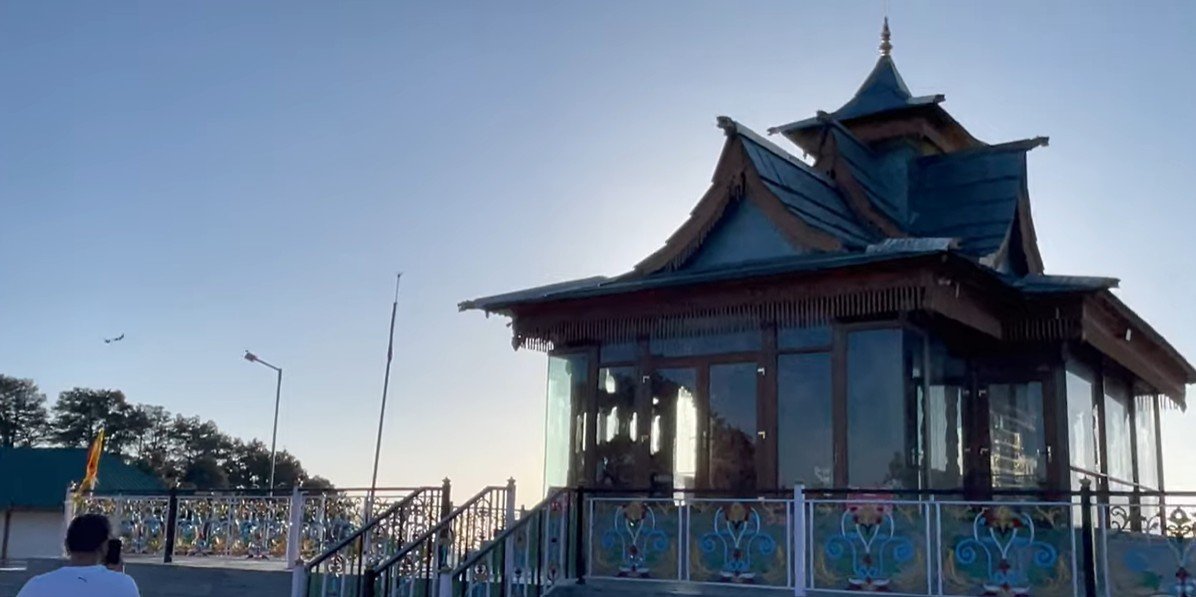
The temple complex was clean and looked carefully maintained. We removed our shoes before entering. Photography and videography were not allowed inside during our visit, so I kept the camera outside and did not try to record the interior. That restriction is worth respecting. The external architecture gives you plenty to look at anyway.
The temple has a distinctive wooden mountain design with layered rooflines, glass panels and detailed railings around the platform. I liked that it did not feel overwhelmed by commercial activity. The setting remained quiet, with the peaks and changing evening sky doing most of the work.

The temple is dedicated to Hatu Mata, who is associated with Goddess Kali in tourism references. Local stories and interpretations around Himalayan temples can vary, so I prefer not to turn every legend into a hard fact. What I can say from the visit is that the temple is an active place of worship, not simply a scenic building at the top of a road.
The sunset view from Hatu Peak
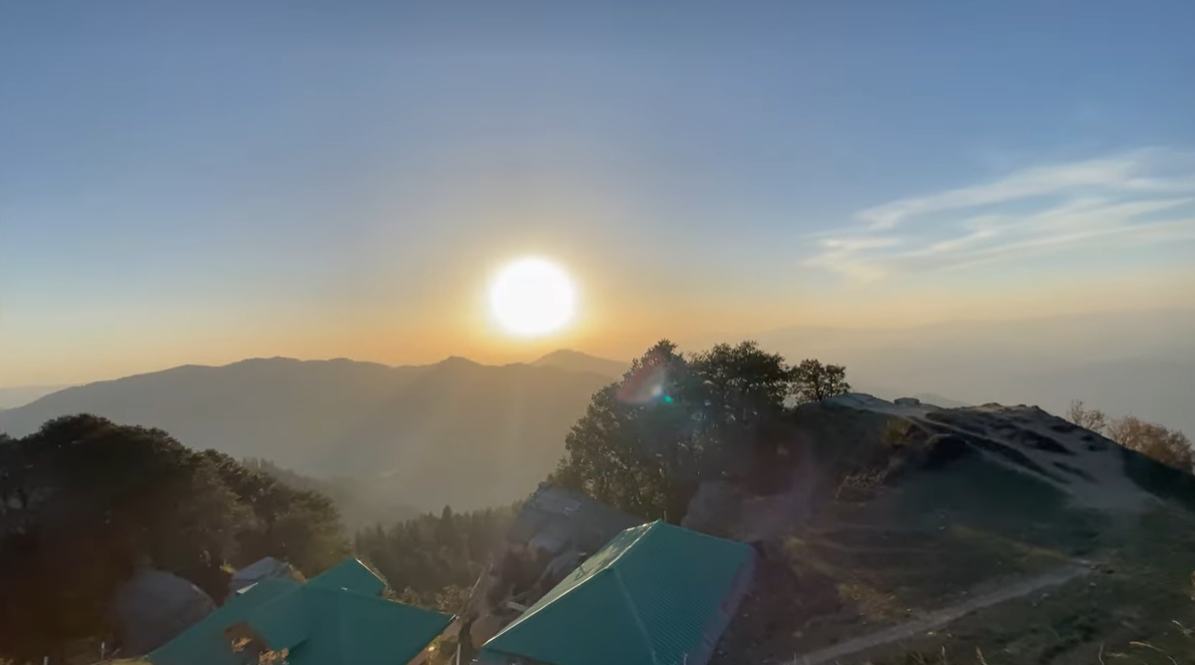
We had come primarily for the sunset. From the temple side, the surrounding ridges spread out in several directions, with snow visible on the farther range. As the sun dropped, a faint winter line started appearing above the darker hills. The sky was clear enough for us to watch the colour change instead of seeing the sun disappear behind cloud.
At Hatu Peak Narkanda, the sunset is not limited to one marked platform. We walked a little toward the higher viewpoint and found open angles across the mountains. Because the final walk is short, you can move between the temple area and the viewpoint without turning the visit into a hike. Still, watch your time. I would not stay until complete darkness unless I had a very clear plan for getting down.
We decided to descend before it became fully dark. The narrow road was already demanding in daylight, and I did not want to add poor visibility to it. This is one of those decisions that may look less dramatic on camera but makes the trip safer and more relaxed.
The pond and café stop below the peak
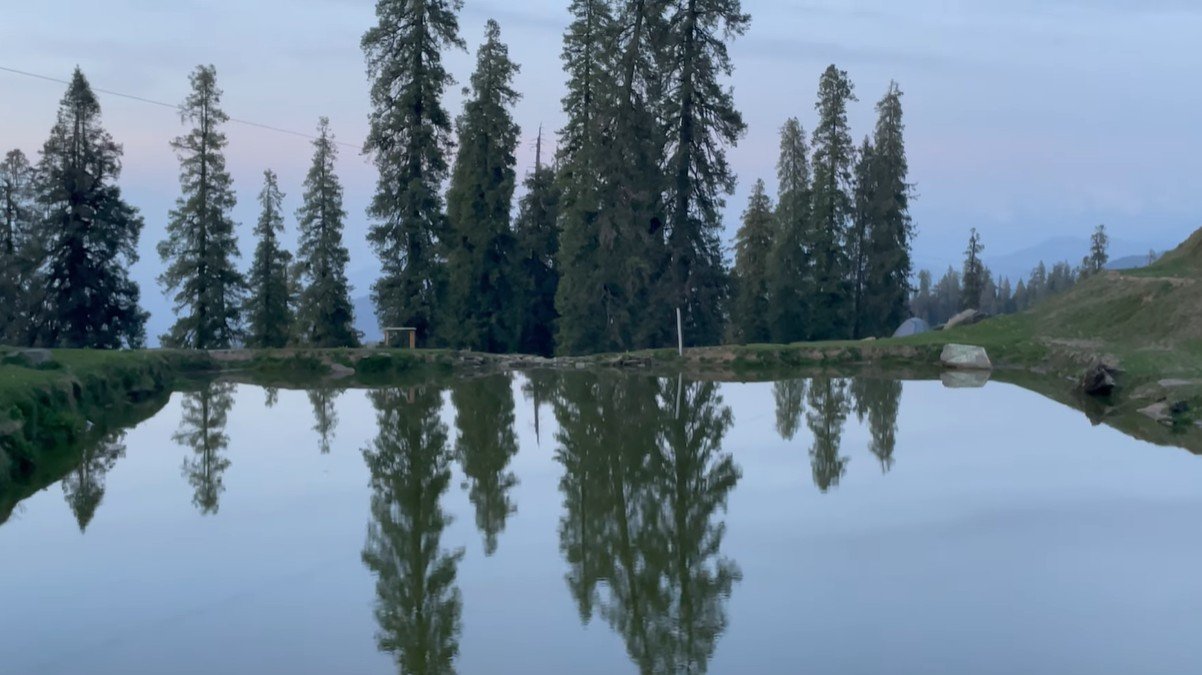
After leaving Hatu Peak Narkanda, we stopped at a small pond surrounded by tall conifer trees. The reflections made it look especially calm in the evening. A café at this midway point offered tea and Maggi, and there were tented stay options nearby. I did not record a verified business name, tariff or booking contact, so I am deliberately leaving those details out.
This stop is useful because there were no proper cafés or rows of food stalls at the temple summit during our visit. If you expect a full meal at the top, you may be disappointed. Carry water and a small snack, or plan tea and Maggi at the pond area while returning to Narkanda.
What I would do differently next time
I would leave Narkanda earlier and reach the top with more daylight in hand. We arrived in time for the sunset, but the late timing meant the descent had to begin soon after. An earlier arrival would leave enough room to walk slowly, sit near the viewpoint and visit the pond without watching the clock.
I would also check the road locally on the same day. Rain, snow, ice, repair work and traffic can change the character of a mountain road very quickly. A route that was open during our visit may not be equally comfortable in another month. Asking your hotel, homestay or a local taxi driver is more useful than relying on an old travel post.
When should you plan the Hatu Peak Narkanda drive?
For a Hatu Peak Narkanda visit like ours, I would keep at least three to four hours free from Narkanda. That is not because the distance is huge. The time disappears in the climb, pauses for oncoming traffic, the short walk around the temple and waiting for the evening light. Trying to fit Hatu Peak between two long driving legs would make the road feel more tiring than enjoyable.
Morning visitors will have more daylight and a less hurried descent. An evening visit gives you the sunset, but it also creates a fixed deadline because the same narrow road has to be covered on the way back. We reached with enough time to look around, yet I still felt that another hour would have made the stop better. I could have spent longer at the viewpoint and stopped at the pond without calculating how much light remained.
I would avoid treating the drive as a fixed all-season activity. Snow, rain and ice can make a narrow road very different from the dry route visible in my video. Even in clear weather, weekend traffic can create repeated passing situations. Ask locally before starting, keep your fuel sorted in Narkanda and do not continue merely because another vehicle has gone ahead. Your own comfort with the road matters more.
Practical planning notes from our visit
- Best fit: travellers staying in Narkanda who want a temple, mountain views and sunset in one outing.
- Walking: only a short walk was required after parking during our visit.
- Road: the final climb is steep and very narrow, with limited passing space.
- Driving choice: use a local taxi if you are not confident on single-lane hill roads.
- Food: do not depend on finding a full meal at the summit. We saw tea and Maggi lower down near the pond.
- Toilet: a dedicated facility near the top charged us ₹10 per person.
- Temple etiquette: remove footwear and follow the current photography rules.
- Sunset timing: begin descending before full darkness if you are driving yourself.
- Weather: carry a warm layer and confirm current road access locally.
How this fits into a Narkanda and Spiti route
Hatu Peak Narkanda was our first major stop after driving from Chandigarh. The following day we planned to continue toward Spiti, so Narkanda worked as a practical break between the plains and the longer mountain route ahead. If you are following a similar journey, Hatu Peak adds a memorable evening without forcing you to change the entire itinerary.
For a nearby stay option from this trip, read my Amar Homestay Narkanda review. I have also written about the more mixed experience at Gadegal Homestay near Narkanda. If you are continuing toward Kinnaur, the next useful stop in this series is my Sarahan travel guide.
My final take on Hatu Peak
Hatu Peak Narkanda gave us the sunset, snowy mountain views and a peaceful temple visit we had hoped for. It was not a long trek or an exhausting sightseeing stop. The Hatu Peak Narkanda road is the trade-off. I would happily return, but I would reach earlier and seriously consider a local taxi if traffic looked heavy.
If you are staying in Narkanda, this is one turn I would not skip. Just do not mistake a short distance for an easy drive.
Frequently asked questions
Can a car reach Hatu Temple?
Cars reached close to the temple during our visit, followed by a short walk. The final road was steep, narrow and required careful passing when vehicles approached from the opposite direction. Confirm current access locally before leaving Narkanda.
Is Hatu Peak Narkanda suitable for people who do not want a long trek?
Yes, if the road is open and you travel by vehicle. We only had to walk a short distance near the top. Visitors who prefer hiking can explore walking options separately, but a trek was not required for our visit.
Is Hatu Peak Narkanda good for sunset?
It worked very well for us. We saw layered mountain ridges, distant snow and the winter line as the sun dropped. Leave enough time to start the descent before darkness, particularly if you are self-driving.
Are food and toilets available at Hatu Peak?
A dedicated toilet near the top charged us ₹10 per person. We did not see proper cafés at the summit. A pond area lower on the road had tea, Maggi and tented accommodation options when we visited.
Should first-time hill drivers take their own car?
I would not recommend the final stretch to a nervous or inexperienced hill driver. The road is very narrow and meeting oncoming vehicles can require reversing or using small passing spaces. A local taxi is the more relaxed choice.