Vegetable Puree for Baby and a Soft Veg Tikki From the Same Bowl
This vegetable puree for baby starts as one bowl of steamed vegetables. My wife blends it into a smooth puree for our son Aryan, keeps some of it aside, and turns that leftover puree into a soft tikki with besan and suji. One batch, two textures: something he eats with a spoon now, and something he can hold and chew a couple of hours later. She calls it one meal that covers both liquid and solid.
This is how we make it at home, filmed in our kitchen. It is not a feeding plan, and we are parents, not nutritionists. Every baby is different, so please check with your paediatrician before you introduce new foods or textures.
Watch my wife make this vegetable puree and soft tikki
The video is the record behind this post. Everything below about the vegetables, the steaming, the texture of the tikki and why we skip salt and sugar comes from what my wife says and does in it.
This baby veg puree and tikki at a glance
| Detail | What we do |
|---|---|
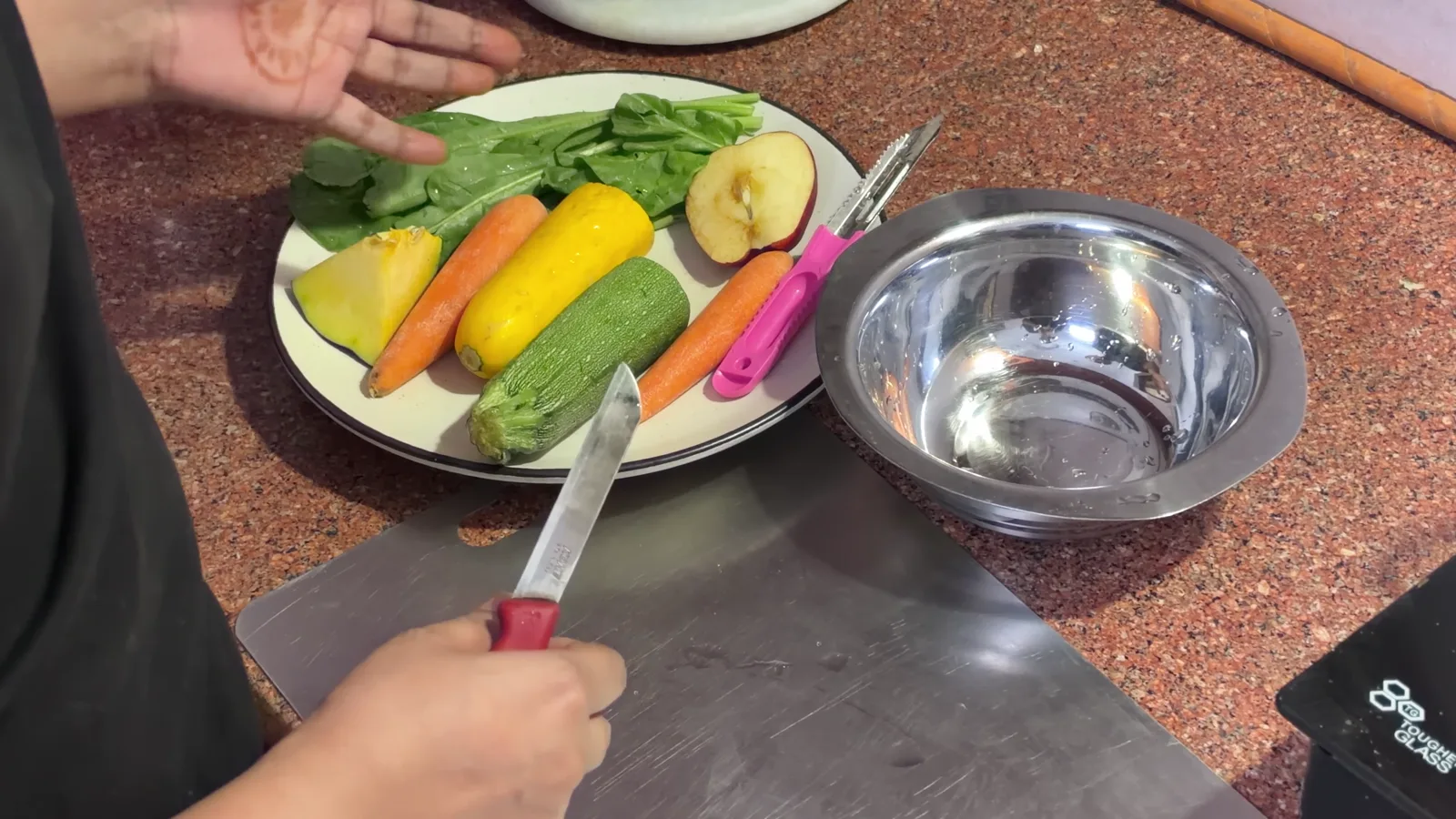
| Vegetables in our video | Green zucchini, yellow zucchini, carrot, pumpkin and some spinach, plus apple |
| Cooking method | Steamed until soft, then blended |
| Water | Boiled water, the same water we keep for the baby |
| Tikki additions | Besan and suji mixed into the leftover puree |
| Fat | Desi ghee made at home |
| Salt and sugar | None added |
| Texture | Puree smooth; tikki kept a little thick and soft, not crunchy |
| How we serve it | Puree first, tikki about two hours later after play time |
Why one bowl gives us two textures
When a baby is somewhere between purees and finger food, it is easy to end up cooking twice. My wife found a simple way around that. She steams one bowl of vegetables, blends it, serves part of it as puree, and keeps the rest for a tikki.
As she puts it in the video, the liquid and the solid both get covered from one batch. The puree is the easy, spoon-fed part. The tikki gives Aryan something to pick up and chew. She also mentioned you can treat the tikki the way you would a soft paratha alongside a vegetable, because it is solid while the puree stays loose.
In our house, the timing works like this. Aryan has the puree first. About two hours later, after he has played for a while, she serves him the tikki. It saves her from starting a second recipe from zero, and nothing from the bowl goes to waste.
If you are cooking for a baby at this stage too, you may also like our apple pear suji halwa for babies, which also uses suji and a little ghee.
Ingredients
Quantities: [FILL ON CONFIRMATION: quantities from Naveen and his wife. They were not said on camera, so none are given here yet.]
For the vegetable puree
- Green zucchini
- Yellow zucchini
- Carrot
- Pumpkin
- A few spinach leaves (they are on the plate and in the steaming bowl in our video)
- Apple
- Boiled water, as needed for blending
For the soft tikki
- Some of the vegetable puree, kept aside
- Besan (gram flour)
- Suji (semolina)
- Pure desi ghee, made at home
No salt and no sugar are added to either part.
How we choose the vegetables
My wife says you can use almost any vegetables you have. Spinach, palak, zucchini and kaddu (pumpkin) all come up in the video. The selection in our house changes a little from day to day.
The one thing she always does is balance the taste. Some vegetables taste strong on their own, so she adds apple and carrot to every batch. That way the whole bowl tastes balanced and Aryan actually eats it. Pumpkin, she says, already tastes fine by itself, but she still balances the mix as a whole. On the day we filmed, she used green zucchini, yellow zucchini, apple and carrot, and added pumpkin as well.
Her reasoning on the nutrition side is simple. The vegetables bring fibre, and she mentions beta carotene from the carrot. The main reason carrot and apple go in every time, though, is taste: they balance the greener vegetables so he will eat the bowl. She also likes how colourful the bowl looks, and that colour comes from the vegetables themselves.
Step 1: Chop the vegetables and apple
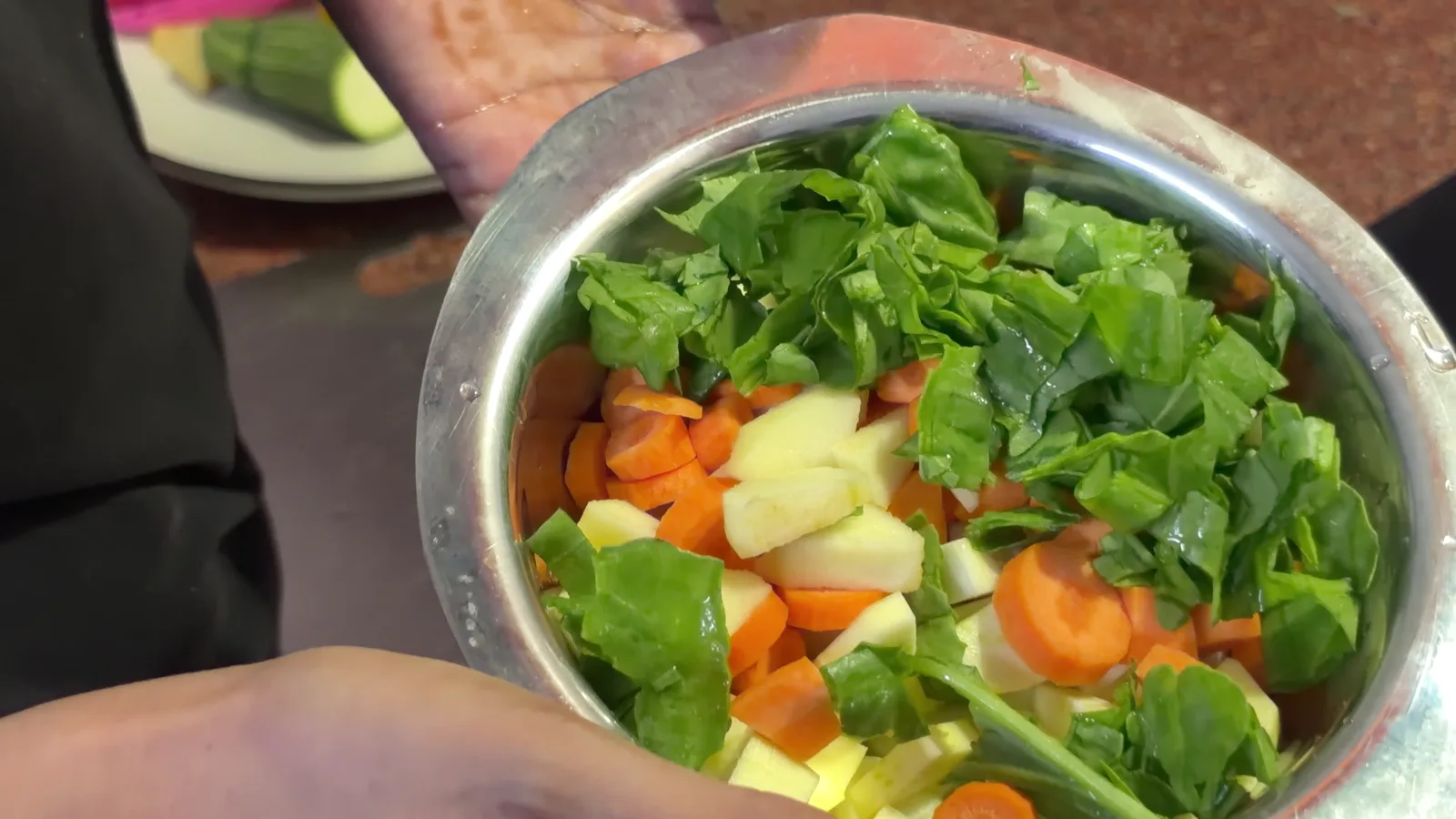
Wash the vegetables and the apple, then chop them into small pieces. In the video she chops everything on a board and collects it all in one bowl.
Step 2: Steam until soft
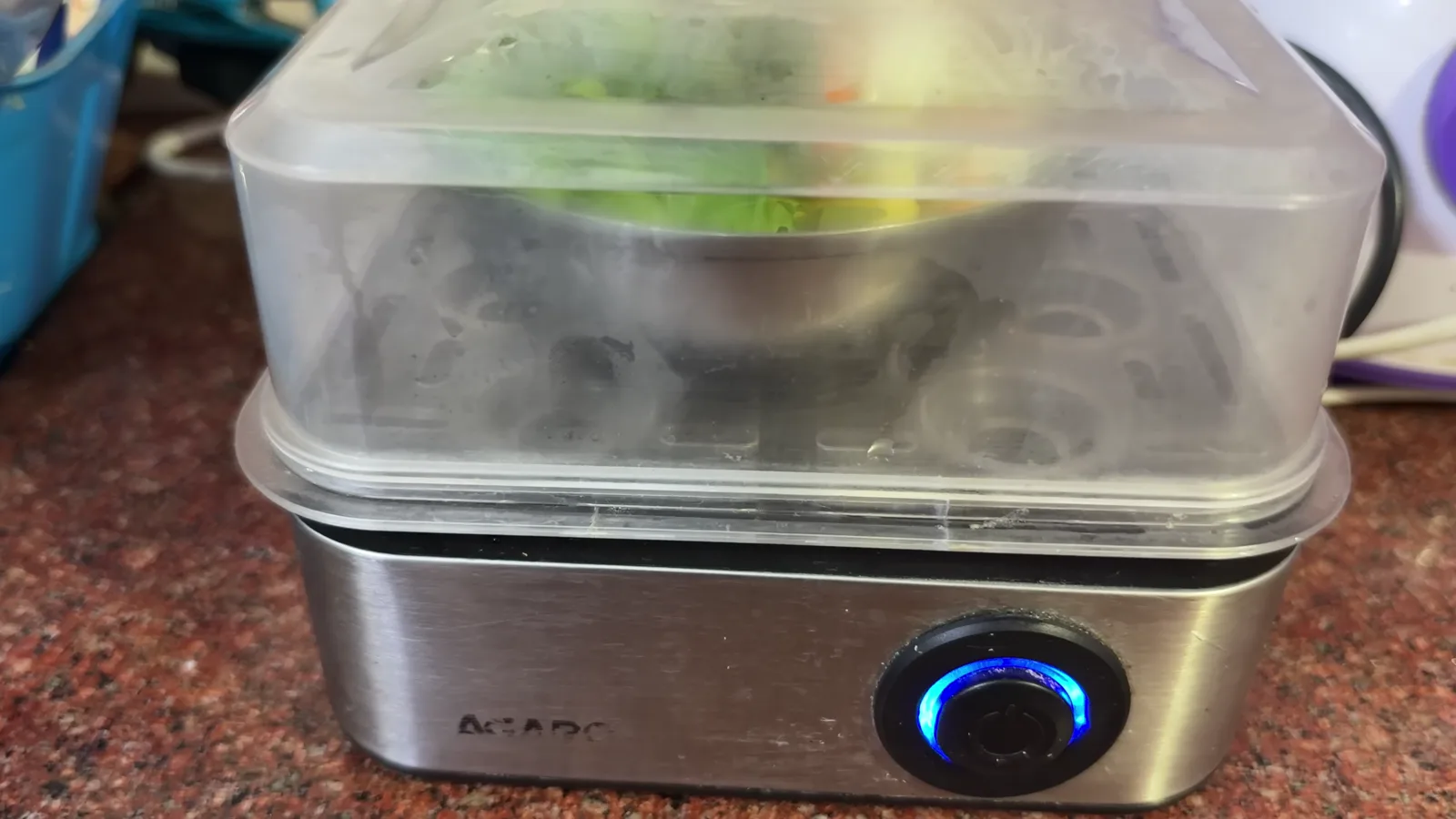
At home we usually steam all the vegetables in our steamer. You do not need one, though. You can boil water in any normal pot, set a strainer over it, put the vegetables in the strainer and cover it. The steam from the boiling water cooks the vegetables.
We bought a small strainer of that kind for travelling, and it also helps when we are visiting someone’s home and do not have our own kitchen setup. It is a useful trick if you are away and still want to make fresh food for the baby.
Step 3: Blend into a smooth puree
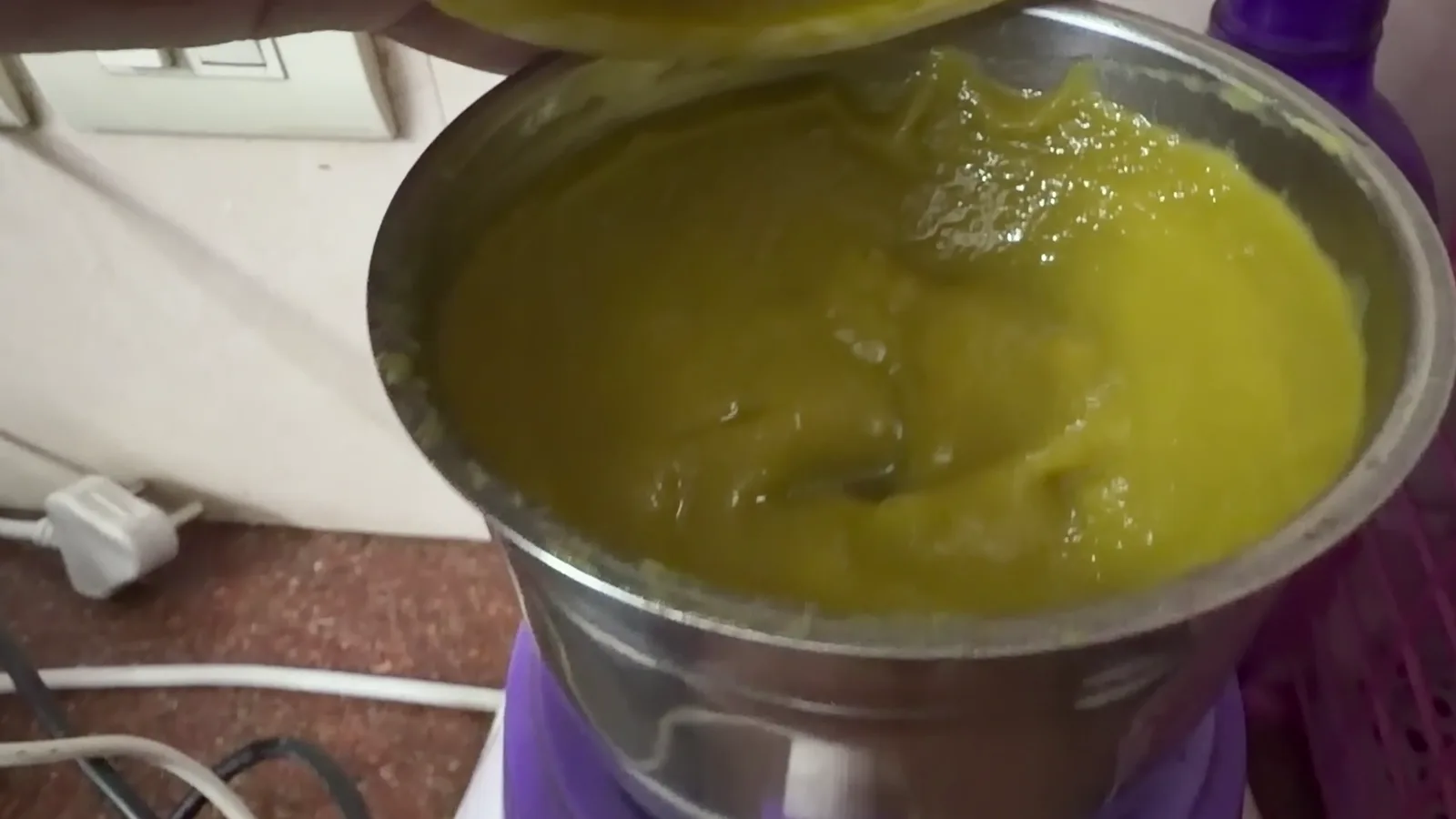
Once the vegetables are soft, blend them. If you need to add water to get the consistency right, use boiled water, the same water you keep aside for the baby. That is the rule my wife follows every time.
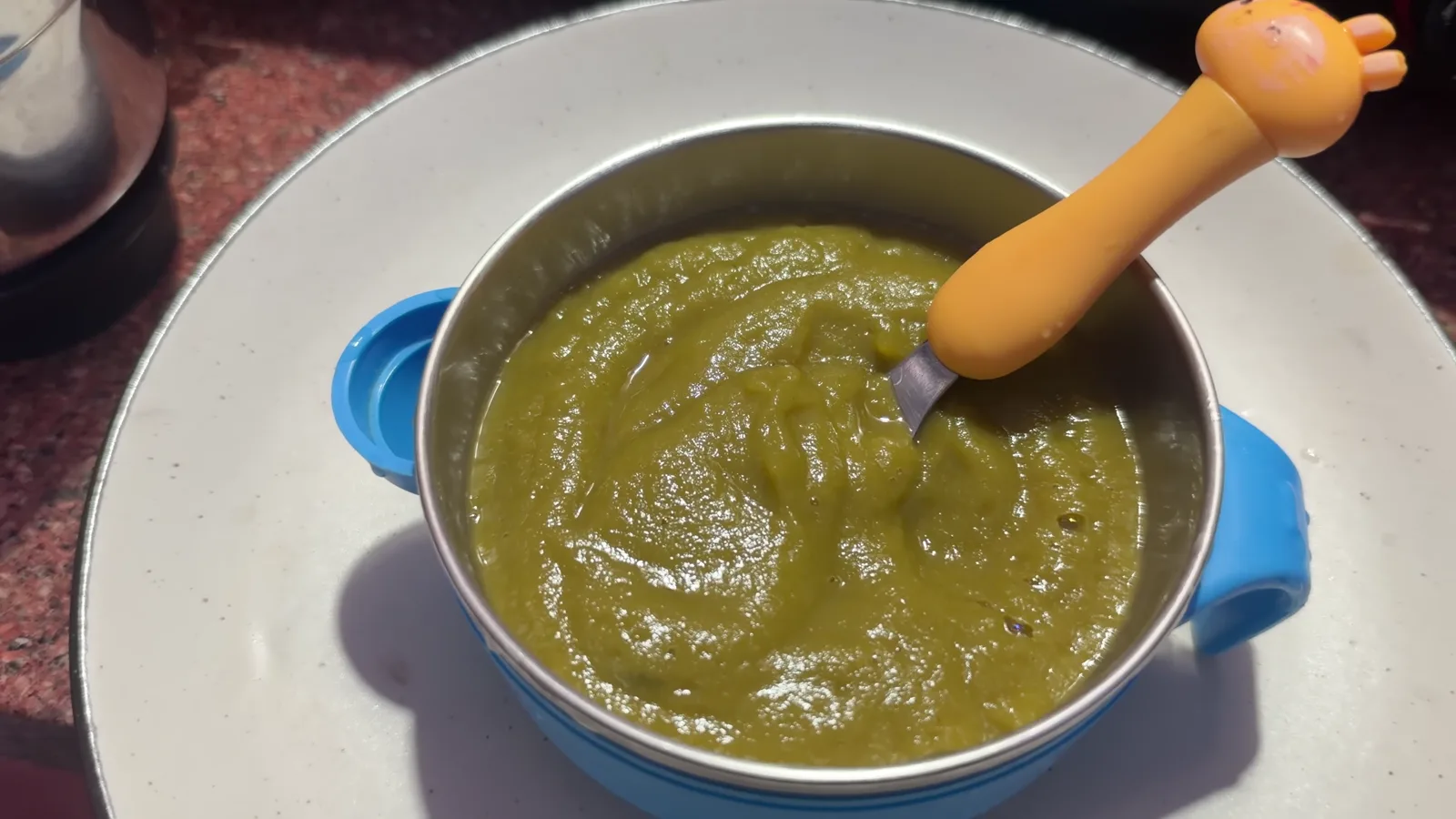
Step 4: Serve part of it as puree
The puree is ready to serve as it is. Spoon some into the baby’s bowl and keep the rest aside for the tikki. Decide how much to keep based on how much your baby usually eats in one sitting.
Step 5: Mix besan and suji into the leftover puree
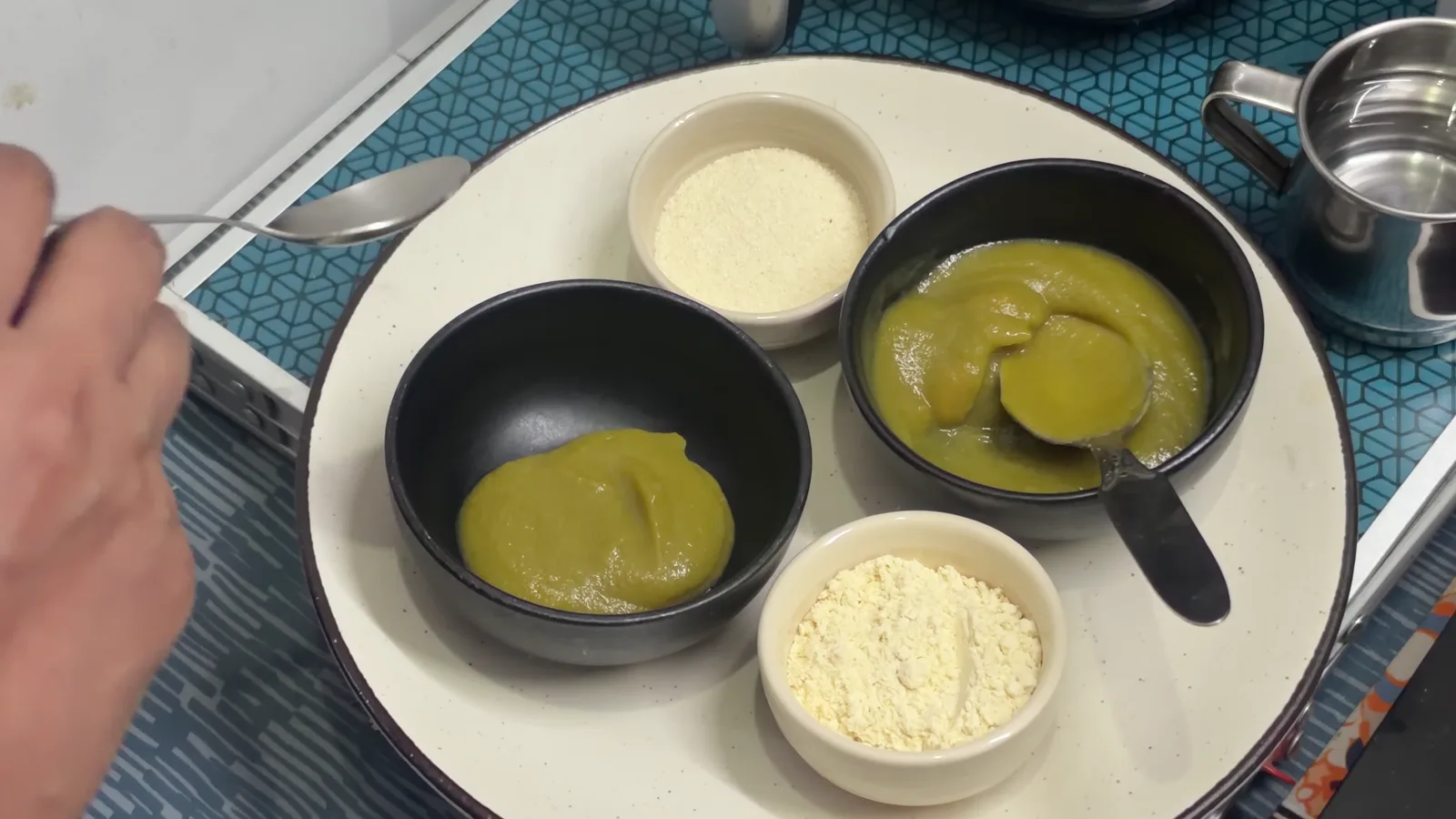
Into the puree you kept aside, mix besan and suji. My wife’s reasons are practical. Suji gives the tikki a little crunch. Besan adds protein. The fibre from the vegetables is already in the puree, so the tikki keeps the vegetables from the same bowl.
The important part is the ratio. She keeps the besan low and the puree high. More puree keeps the tikki soft, so Aryan can chew it easily. Too much besan would make it firmer than a baby needs.
Step 6: Cook the tikki in desi ghee
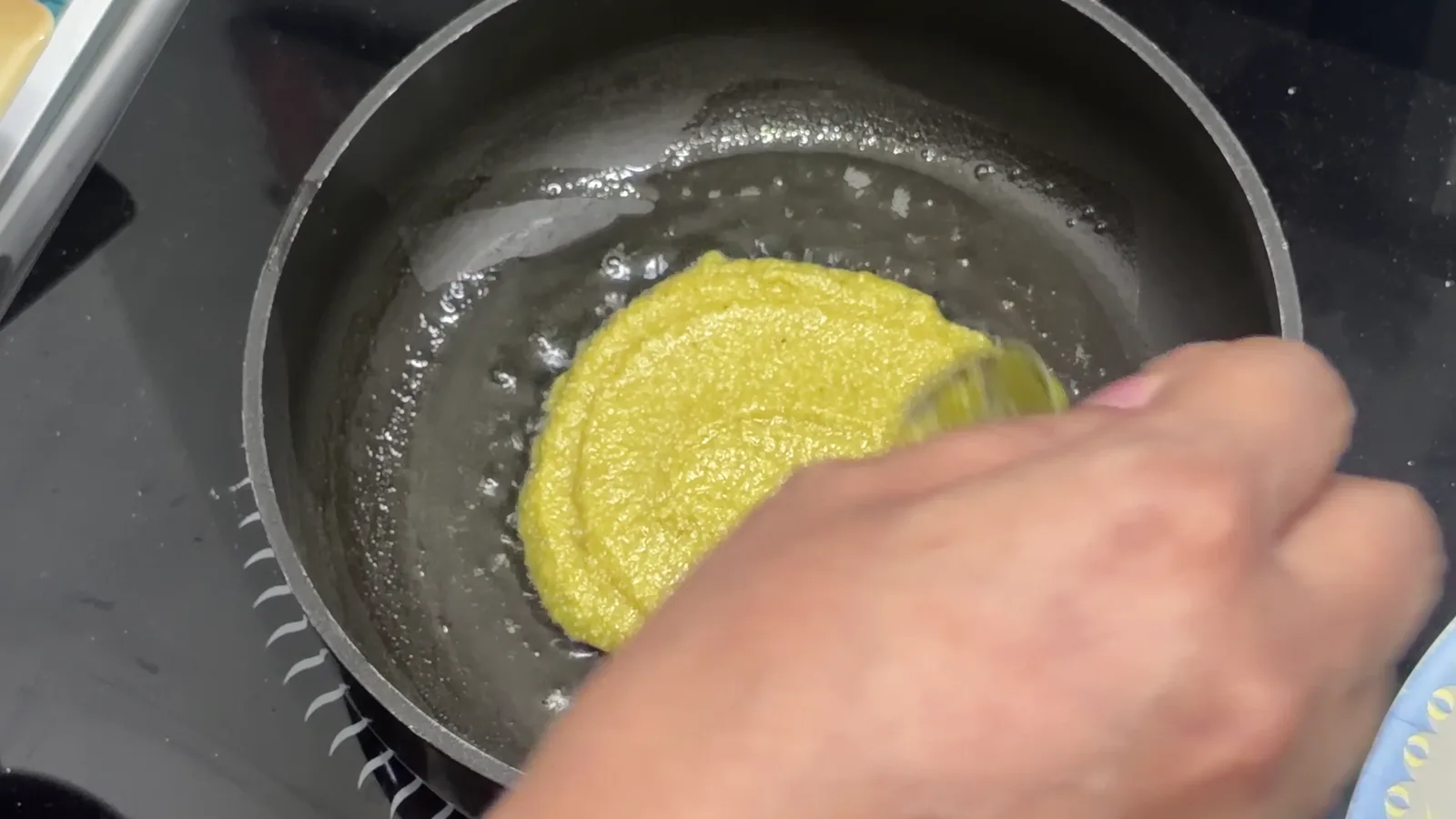
Heat some desi ghee in a pan. She is particular about this: for babies we use only pure ghee, and ours is made at home.
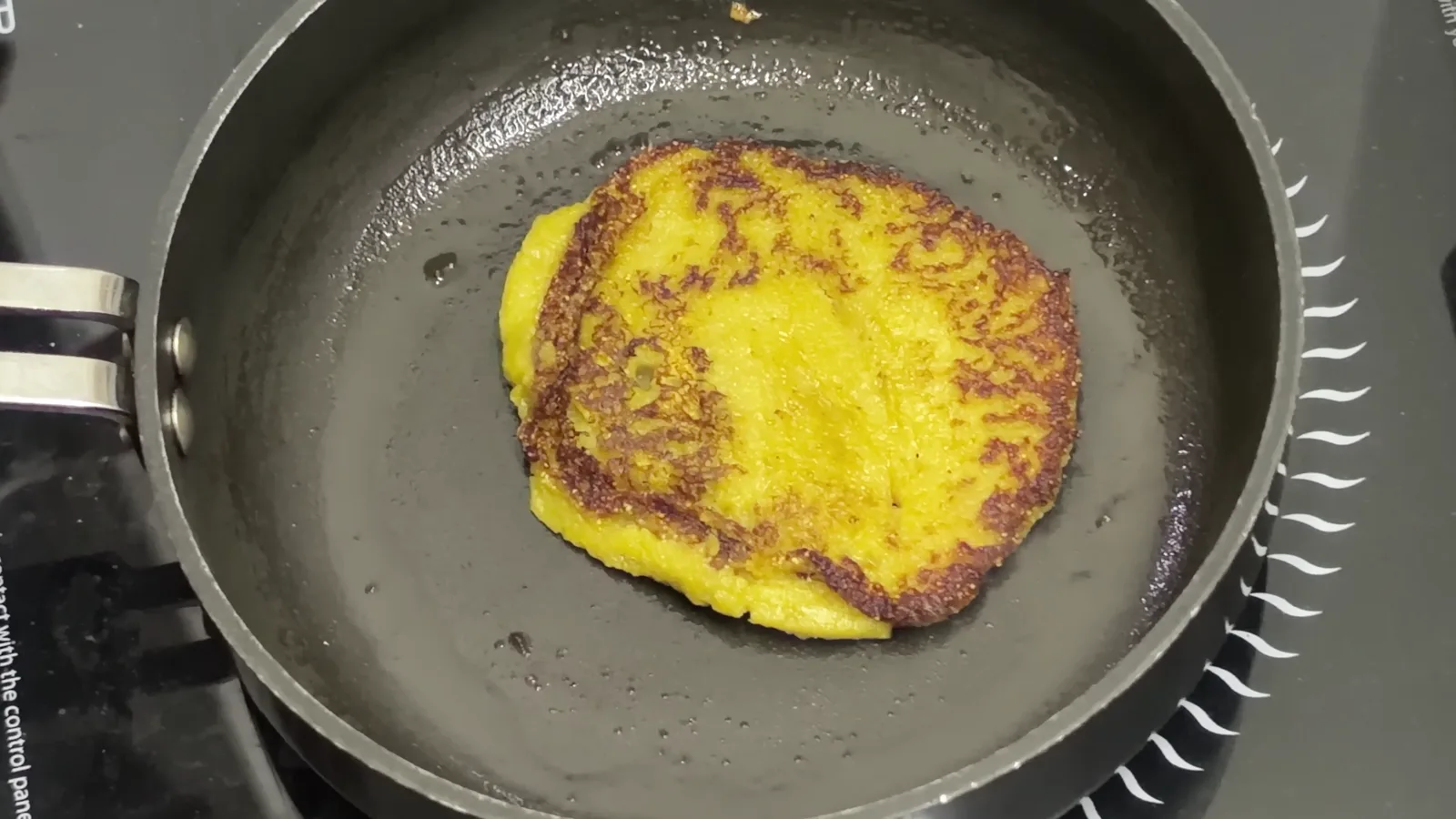
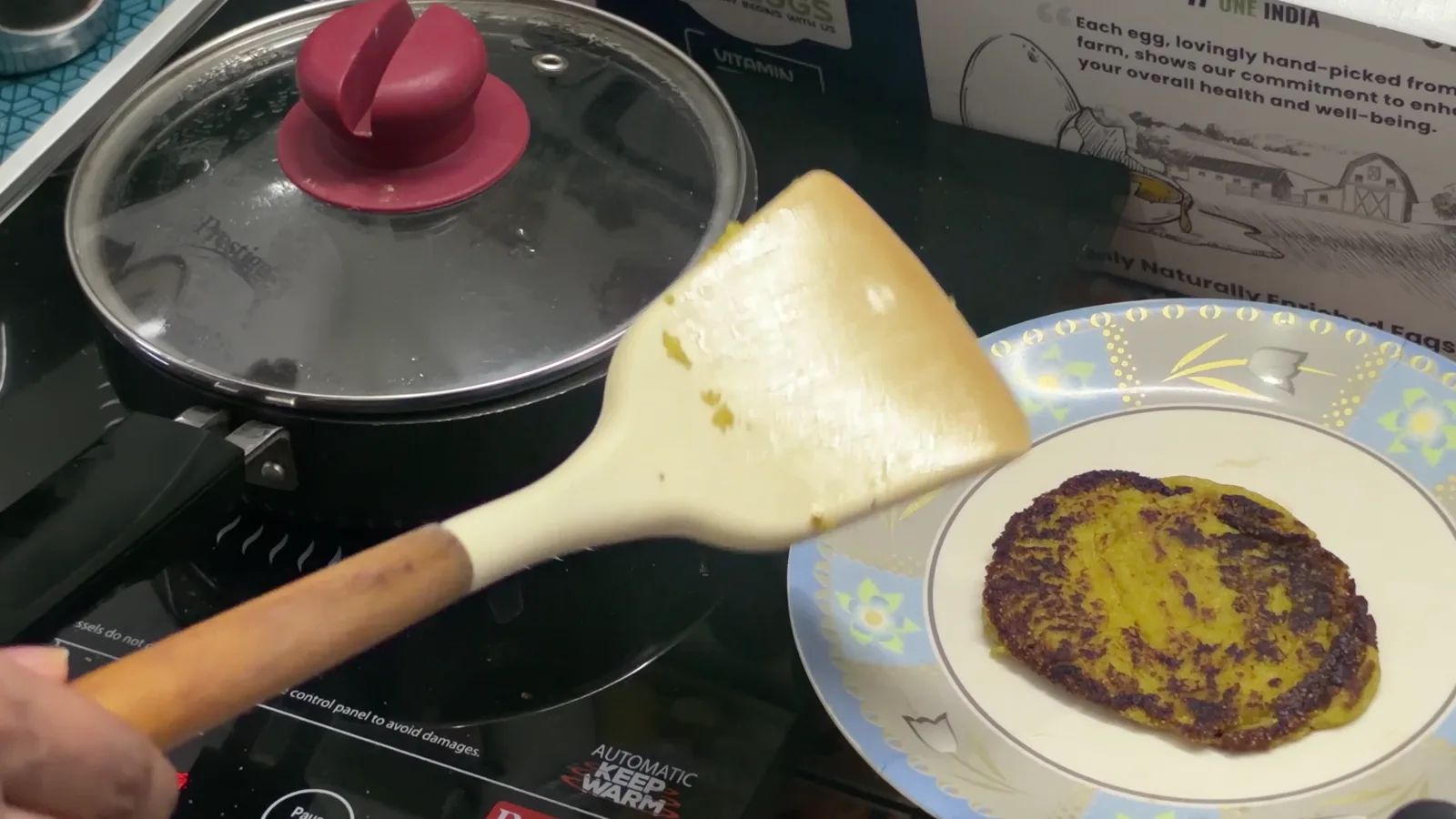
Spoon the mixture into the pan in small tikkis. Try to keep each one a little thick. In her words, a thicker tikki stays soft. It will not turn very crunchy, so it does not hurt the baby while eating. Cook it on both sides until it turns golden, then move it to a plate.
The texture we aim for
For the puree, smooth. For the tikki, soft on the soft side. That is the whole idea of the recipe. If you look at the tikki in the video, you can see it is kept soft rather than crisp, and that is on purpose. A crunchy, hard tikki is not what we want for a baby.
If your tikki comes out too firm, the usual reason is too much besan or suji for the amount of puree. Next time, use more puree and less flour.
Small tips from my wife’s kitchen
- Balance before you blend. If the bowl is heavy on strong greens like spinach, the apple and carrot are what make it taste balanced. Do not skip them.
- Keep some puree back. Set aside the portion for the tikki before you serve, not after the baby has eaten from the bowl.
- Go easy on besan. A little is enough. The tikki should be mostly puree.
- Thick, not thin. Spoon the batter in a slightly thick layer so the tikki stays soft instead of turning crunchy.
- Boiled water only. Any water that goes into the puree is the same boiled water you keep for the baby.
- Pure ghee. She uses only pure desi ghee for Aryan’s food, made at home.
What Aryan made of it
At the end of the video, Aryan tries the tikki in his high chair, fed a piece by hand, and he eats it. My wife also says we did not add salt because he eats it as it is.
That is one sitting with one baby, not a promise for every child. Babies have their own tastes and their own pace with new textures, so give your baby time with it.
Why we add no salt and no sugar
We do not add salt or sugar to this recipe. My wife mentions the common advice not to introduce sugar before two years. We also leave out salt, and Aryan eats it without salt, so we see no reason to add any.
The NHS guidance on foods to avoid giving babies and young children says not to add salt to a baby’s food or cooking water, because too much salt is not good for their kidneys. It also says babies do not need sugar, and that food and drink with added sugar or sweeteners should be avoided for children aged four or younger. Fruit itself is fine, which is why the apple stays in.
A few safety notes
- Every baby is different. Check with your paediatrician before introducing new foods, new textures or finger food.
- Besan is made from chickpeas. If chickpeas or gram flour are new to your baby, ask your paediatrician how to introduce them.
- Always stay with your baby while they eat, especially with finger food like a tikki.
- Let the tikki cool before serving, and check the texture yourself. My wife keeps it soft so he can chew it easily.
- Use boiled water for blending, the same water we keep for the baby.
Where this recipe sits in Aryan’s day
Splitting the bowl this way keeps things simple for us: one cooking session, two servings at different times of the day, and a smooth meal plus a finger food from the same vegetables.
The recipes we make for Aryan are collected in a baby food playlist on our YouTube channel, and we keep adding new ones as we try them.
Questions about this baby veg puree and tikki
Which vegetables can I use for a baby vegetable puree?
My wife uses whatever is available, such as zucchini, spinach, palak, pumpkin and carrot. She always adds apple and carrot to balance the taste so the baby enjoys it. Check with your paediatrician about any vegetable that is new to your baby.
Can I make the puree without a steamer?
Yes. Boil water in any pot, place a strainer over it with the vegetables inside, cover it, and let the steam cook them. We use this method when travelling.
Why add besan and suji to the tikki?
Suji gives a little crunch. Besan adds protein. We keep both low compared with the puree so the tikki stays soft.
How do I keep the tikki soft for a baby?
Use more puree and less besan, and keep each tikki a little thick in the pan. A thin tikki with a lot of flour turns crunchy faster.
Do you add salt or sugar?
No. We add neither. The NHS also advises against adding salt or sugar to a baby’s food.
When do you serve the tikki?
We serve the puree first and the tikki about two hours later, after Aryan has played for a while. That way one batch covers both a smooth meal and a finger food.